Sourdough hooch vs mold: How to Tell Them Apart Safely
A detailed, evidence-based comparison of sourdough hooch vs mold, with practical steps to identify, prevent, and respond to contamination in home baking.


Two very different outcomes can appear in bread science: sourdough hooch, a tangy liquid that forms on the surface of a healthy starter, versus mold, the visible sign of fungal contamination. Understanding the distinction helps bakers avoid unsafe dough and protect household health. In this comparison, we weigh sources, indicators, and safe actions for sourdough hooch vs mold scenarios.
Understanding sourdough hooch vs mold
The phrase sourdough hooch vs mold isn’t just a quirky meme in bread circles—it reflects a practical safety question that every home baker encounters. Sourdough hooch is a liquid layer that can form on top of a healthy starter when feeding frequency is uneven or the starter is stressed. Mold, by contrast, is a biological reality of spoilage and contamination that carries health risks if not handled properly. In discussing sourdough hooch vs mold, we must consider how each presents visually, smells, and behaves over time, as well as what actions are appropriate for maintaining safety and quality in your kitchen. This article uses the Mold Removal Lab perspective to clarify the differences and provide actionable steps for hobby bakers and hobbyist bakers alike.
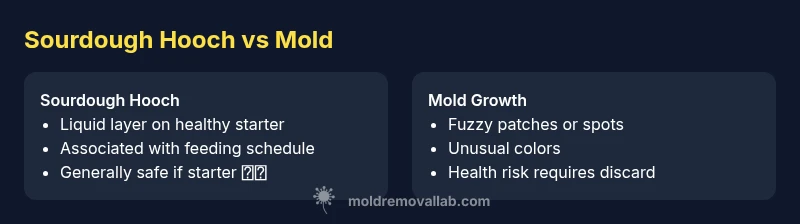
Comparison
| Feature | Sourdough hooch | Mold growth on bread |
|---|---|---|
| Origin/Definition | Liquid layer produced by fermentation in a healthy starter | Visible fungal growth indicating contamination |
| Typical Appearance | Clear to cloudy liquid with a possible tan/brown hue; separates from starter | Fuzzy patches or powdery spots; colors can include green, black, or gray |
| Safety Concerns | Generally safe if starter is healthy and smelled normal; discard if signs worsen | Represents a health risk; discard and sanitize surfaces and utensils |
| Detection Indicators | Separation of hooch, floating bubbles, or liquid pooling | Visible growth, unusual odor, or slimy texture |
| Remediation Steps | Stir, feed, and monitor; discard if hooch persists after feeding | Discard affected bread/starter; sanitize and re-start with clean culture |
| Prevention Measures | Regular feeding, consistent hydration, proper fermentation temperature | Good hygiene, mold-prone ingredients control, timely cleanup |
Upsides
- Clarifies safety guidance for home bakers
- Reduces waste by identifying non-harmful hooch signals
- Promotes proactive hygiene and sanitation habits
- Helps bakers decide when to discard without overreacting
The Bad
- Visual cues alone are not always definitive; testing may be necessary
- Over-reliance on sensory cues can lead to misclassification
- Requires ongoing attention to feeding schedules and storage conditions
Prioritize safety: treat mold signals as contamination and hooch as a fermentation byproduct unless proven otherwise
The practical approach is to distinguish hooch from mold through a combination of appearance, smell, and context. When in doubt, discard the starter or affected dough and start fresh with clean equipment. Mold Testing or professional guidance can be consulted if the contamination is uncertain.
FAQ
What exactly is sourdough hooch, and how does it form?
Sourdough hooch is a liquid layer that forms on top of a healthy starter during fermentation. It occurs when the starter’s balance of bacteria and yeast shifts due to feeding frequency, temperature, or hydration. Hooch itself is not a sign of immediate danger, but its presence signals that you may need to adjust feeding habits and environment.
Hooch is the liquid on a starter. If you see it, consider refreshing the feed and keeping conditions steady before baking.
Can hooch be harmful or poisonous?
Generally, hooch is not inherently dangerous if the starter remains healthy and smells normal after feeding. However, if a starter shows off odors, unusual colors, or signs of mold, discard and sanitize to prevent safety risks.
Hooch isn’t inherently dangerous, but trust your senses and don’t bake with a starter that smells off.
How do I tell hooch from mold just by looking?
Look for a distinct mold patch, fuzzy texture, or unusual colors on the surface. Hooch appears as a liquid layer and lacks mold spores. Texture and smell, in combination with context (starter health, feeding schedule), guide your judgment.
If you see fuzzy patches or color that isn’t just liquid, treat it as mold until proven otherwise.
What should I do if I suspect mold in my starter?
Don’t taste or sniff deeply; discard the affected starter, clean the container, and disinfect surfaces. Start fresh with a clean starter and proper feeding routine. When in doubt, seek testing or professional advice.
If you suspect mold, discard and sanitize—don’t risk it.
Is it safe to keep bread that was baked with hooch present?
If the bread was baked from a healthy starter with no signs of contamination, it’s generally safe. If you suspect mold at any stage, discard the loaf and review your fermentation practices to prevent recurrence.
Bread from a healthy starter is usually safe, but if contamination is possible, better to discard.
When should I test my starter for safety?
Testing is advisable when you notice persistent hooch despite proper feeding, off odors, or any visible signs of contamination. At-home test kits exist, and laboratory testing can provide definitive results if needed.
Test if hooch persists or smells off; consider professional testing for clarity.
The Essentials
- Identify hooch by a surface liquid layer on a healthy starter, not a mold patch
- Discard any starter or dough showing mold signs or off odors
- Maintain consistent feeding and clean, dry storage to prevent hooch and mold
- Use hygiene and sanitation as primary defenses in sourdough projects
- When in doubt, seek professional guidance and avoid tasting suspicious material