Mold on Broccoli: Safe Handling and Disposal
Learn how to identify mold on broccoli, understand the risks, and follow practical steps to dispose of moldy produce safely while preventing future spoilage.


According to Mold Removal Lab, mold on broccoli should be treated as a spoilage risk: discard the entire head rather than cutting away the moldy portions. Mold on soft produce can penetrate beyond visible spots, and washing or cutting cannot make it safe. To reduce future mold, refrigerate broccoli promptly, store in breathable produce drawers, and avoid moisture buildup.
What mold on broccoli indicates about safety and spoilage
Mold on broccoli is a clear sign that the produce has begun to spoil. While the visible mold spots might seem small, the unseen mycelium can extend into surrounding florets and the core, especially in dense heads. According to Mold Removal Lab, this makes salvage impractical and potentially unsafe for consumption. The safest course of action is to treat moldy broccoli as a spoiled item and dispose of it properly. Even if the mold appears limited to certain areas, spores can spread within the refrigerator and onto neighboring produce. For homeowners, the practical takeaway is simple: prioritize safety over cost by discarding spoiled heads and cleaning the storage area to prevent cross-contamination.
Explanation backed by general food-safety principles: mold indicates microbial activity, and some molds can produce compounds that are not detectable by sight or smell. Precautions are especially important for households with children, the elderly, or anyone with a compromised immune system. While rinsing and cutting can remove surface mold on hard foods, broccoli is a porous, leafy vegetable where mold can hide in tight clusters. Therefore, disposal is recommended rather than selective trimming.
Common molds found on broccoli and why they matter
Broccoli can host a variety of molds, including common food molds like Aspergillus, Penicillium, Rhizopus, and Mucor species. These molds thrive in moist, cool environments and can form fuzzy filaments that spread through the head even if only a few spots are visible. The health implications depend on the mold type and individual sensitivity; some molds are more likely to trigger allergic reactions, while others may produce compounds that irritate the lungs or gut. The presence of mold on broccoli signals that the produce quality has degraded, and consuming moldy broccoli is not worth the risk. For most households, the prudent action is to discard and prevent future occurrences by improving storage conditions and handling practices.
In practice, if you see mold on broccoli, do not rely on removing the visible portion. Mold can extend beyond what’s visible, making partial trimming ineffective.
Health risks and myths
Exposure to mold on produce, including broccoli, can provoke allergic symptoms in sensitive individuals, such as sneezing, coughing, runny nose, or skin irritation. In some cases, inhaling mold spores may worsen asthma or trigger respiratory discomfort. While not every mold produces toxins, some species can generate mycotoxins under certain conditions; long-term exposure to moldy foods is not advisable. Mold Removal Lab Analysis, 2026, emphasizes that the safest approach with moldy produce is disposal rather than attempting to salvage through washing or trimming. A common myth is that a strong rinsing can make moldy broccoli safe; in reality, mold can penetrate the tissue and may not be removed by surface cleaning.
Practical takeaway: treat moldy broccoli as unsafe to eat, and focus on preventing mold growth in your fridge with proper temperature and moisture control.
Immediate steps when you spot mold
The moment you notice mold on broccoli, take immediate, deliberate action. Start by separating the moldy head from other produce to prevent cross-contamination. Wear gloves and, if possible, a mask to reduce inhalation of spores. Do not taste, sniff, or sample moldy broccoli. Place the broccoli in a sealed bag or container before disposing in the trash. Clean the sink, counter, and any nearby surfaces with soap and warm water, then disinfect with an appropriate sanitizer to minimize lingering spores. Finally, inspect nearby produce for similar signs and adjust storage practices to slow mold growth, such as reducing moisture and ensuring proper airflow in the fridge.
How to dispose of moldy broccoli safely
Disposal should be decisive and hygienic. Place the moldy broccoli in a sealed trash bag and tie securely to prevent leakage. Do not compost moldy broccoli, as the mold can survive the composting process and contaminate other materials. If you have a compost bin, consider insulating it outdoors and disposing of moldy materials separately. After disposal, empty and reseal the trash can and wash it with hot soapy water. Sanitize the refrigerator shelves and drawers where the broccoli was stored to prevent cross-contamination and reassure household members about safety.
How to store broccoli to prevent mold
Preventing mold starts with proper storage. Rinse broccoli only if you plan to cook it soon, and dry it thoroughly before refrigerating. Store broccoli in the crisper drawer or a breathable produce bag that allows air circulation; avoid tight plastic wrap that traps moisture. Temperature should be kept around 32–40°F (0–4°C) with high humidity settings only if your fridge supports them. At-home moisture control is key: wipe condensation from the crisper, avoid leaving broccoli in damp containers, and do not store near high-moisture items like onions or leafy greens that release moisture. Regularly check produce and remove any items showing signs of spoilage promptly. This practice aligns with general food-safety guidelines and reduces mold risk across all produce.
Fridge setup for produce to minimize moisture
A well-organized fridge can significantly reduce mold risk. Designate a dedicated produce drawer with adjustable humidity if available. Use clear, breathable containers for broccoli and other cruciferous vegetables to monitor moisture more easily. Place moisture-absorbing products cautiously and never store broccoli on top of fruit bowls that release ethylene and accelerate spoilage. Temperature stability matters: keep the fridge at or below 40°F (4°C) and avoid frequent door openings during peak spoilage periods. Routine cleaning of shelves and drawers helps keep surfaces free from mold spores and reduces cross-contamination across all produce.
Is cutting away mold ever safe?
In general, cutting away mold from broccoli is not a safe practice. Broccoli is a dense, tree-like vegetable with many nooks where mold can hide. The visible portion may appear clean, but the internal tissue can harbor spores. Cutting away mold can spread spores to clean surfaces, knives, and hands. The safest course is to discard the entire contaminated head and sanitize all surfaces that contacted the moldy item. This approach aligns with the principle of minimizing exposure to potential toxins and spores, especially for households with children or immunocompromised individuals.
Cleaning kitchen surfaces after handling moldy produce
After handling moldy broccoli, clean all touched surfaces with soap and warm water, then disinfect with a kitchen-safe sanitizer. Pay special attention to cutting boards, knives, countertops, and the sink. Wash your hands thoroughly with soap and water for at least 20 seconds, and consider wearing gloves during disposal to further reduce skin contact with mold spores. If you notice persistent odors or visible mold elsewhere in the kitchen, address those areas promptly to prevent cross-contamination. Regular cleaning routines can lower mold risk across all food preparation surfaces.
Tools & Materials
- Disposable gloves(Latex-free if possible; protects hands during disposal)
- Seal-able trash bags(For safe containment of moldy broccoli)
- Paper towels(Dry surfaces and hands after handling)
- Mild dish soap(For initial cleaning of surfaces)
- Disinfectant spray or diluted bleach solution(Use as recommended by label for sanitizing surfaces)
- Fridge thermometer or accurate temperature gauge(Helps monitor storage conditions)
- Face mask (optional)(Helpful in poorly ventilated spaces when spores are suspected)
Steps
Estimated time: 12-15 minutes
- 1
Assess mold visibility and decide
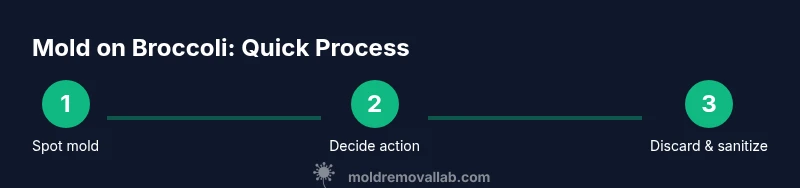
Scan the broccoli head for fuzzy growth and unusual odors. If visible mold is present, plan for disposal rather than salvage. This reduces risk of cross-contamination and protects household members.
Tip: If unsure, err on the side of safety and prepare for disposal rather than salvage. - 2
Separate and seal
Put the moldy broccoli into a seal-able bag or container to prevent spores from spreading. Keep it separate from other foods during disposal.
Tip: Seal as soon as possible to minimize airborne spores when opening the bag. - 3
Dispose safely
Dispose of the moldy broccoli in a sealed bag in the outside trash. Do not compost moldy produce, as mold can survive composting and contaminate other materials.
Tip: Always wash hands after handling and sanitize surfaces that touched the moldy item. - 4
Clean and sanitize prep area
Wash the sink, countertops, and any utensils used with soap and water. Follow with a disinfectant to reduce residual spores.
Tip: Allow sanitizer to air-dry for maximum effectiveness. - 5
Inspect nearby produce
Check broccoli and nearby items for signs of spoilage. Remove any other items showing evidence of mold and re-evaluate storage conditions.
Tip: Move susceptible items to crisper drawers with controlled humidity. - 6
Adjust storage to prevent recurrence
Ensure broccoli is dry before refrigerating and store in breathable containers. Maintain fridge at 32–40°F (0–4°C) and minimize moisture buildup.
Tip: Avoid stacking damp items that block airflow and trap moisture.
FAQ
Is mold on broccoli dangerous if I cook it?
Cooking does not reliably destroy mold or its toxins. If mold is present on broccoli, discard it to avoid potential health risks. Mold can produce mycotoxins that survive cooking and pose a risk to sensitive individuals.
Cooking may not remove all mold risks; discard moldy broccoli to stay safe.
Can I salvage moldy broccoli by cutting away the mold?
No. Mold can extend into the interior of broccoli. Cutting away surface mold does not guarantee safety and may spread spores to utensils and surfaces.
Salvaging moldy broccoli by trimming is not recommended.
Will rinsing or washing remove mold from broccoli?
Rinsing cannot reliably remove mold from broccoli. Mold spores can be embedded in the tissue. Discard the affected head and sanitize surfaces after handling.
Rinsing won’t guarantee safety; discard moldy broccoli.
How should I store broccoli to prevent mold in the future?
Store broccoli in a breathable container or perforated bag in the fridge, at 32–40°F (0–4°C). Keep moisture low and inspect regularly to catch spoilage early.
Use breathable storage and keep the fridge cool to prevent mold.
What should I do with other produce near the moldy broccoli?
Inspect nearby items for signs of spoilage and remove anything moldy. Wipe down shelves and adjust storage to minimize cross-contamination.
Check nearby produce and sanitize surrounding surfaces.
Are there long-term health concerns from occasional mold on produce?
Most healthy individuals recover without issue, but repeated exposure may affect those with allergies or compromised immunity. Practice safe disposal and follow good fridge hygiene.
Most people recover, but avoid repeated exposure if you’re sensitive.
Watch Video
The Essentials
- Discard moldy broccoli promptly to prevent health risks.
- Mold can penetrate broccoli tissue; avoid trimming or washing away safety concerns.
- Improve refrigerator storage to slow mold growth and protect nearby produce.
- Always sanitize surfaces after handling moldy produce.
- Do not compost moldy foods to prevent environmental spread.