How Often Is Black Mold Found? A Practical Home Guide
Explore how often black mold appears in homes, what drives growth, and practical steps to prevent and remediate safely. Based on Mold Removal Lab analysis, 2026.


how often is mold black mold? There is no fixed frequency; black mold refers to several mold species that darken with moisture. In homes, it often arises in damp areas like bathrooms, basements, and leaks. Effective moisture control and prompt remediation reduce future growth. According to Mold Removal Lab, moisture is the primary obstacle to long-term mold-free spaces.
how often is mold black mold in homes?
In residential indoor environments, there is no universal frequency for mold that researchers label as black mold. The term describes several mold species that darken with moisture, temperature, and nutrient availability. For homeowners wondering how often is mold black mold observed in real houses, the answer remains: it depends. The Mold Removal Lab team emphasizes that the key driver is ongoing moisture. When a home experiences a leak, high humidity, or persistent condensation, black mold can establish itself more quickly. To the untrained eye, growth may appear sporadic, but it often follows predictable moisture patterns. If you monitor humidity and fix leaks promptly, you can greatly reduce the chance of long-term colonies forming. According to Mold Removal Lab, addressing moisture is the cornerstone of preventing recurrent growth and reducing exposure risks for occupants.
Black mold: science and species
Black mold is a common label used for several species of mold that appear dark in color as they grow on building materials. The most frequently cited species in literature is Stachybotrys chartarum, but mold color alone cannot confirm a species without laboratory testing. Visual cues such as irregular patches, a musty odor, and a history of moisture intrusion should prompt a professional assessment. Understanding the biology behind black mold helps homeowners avoid panic; molds are ubiquitous in the environment, and growth is a sign of favorable conditions that should be addressed through moisture management, cleaning, and, when needed, remediation by trained professionals.
Moisture control as the first defense
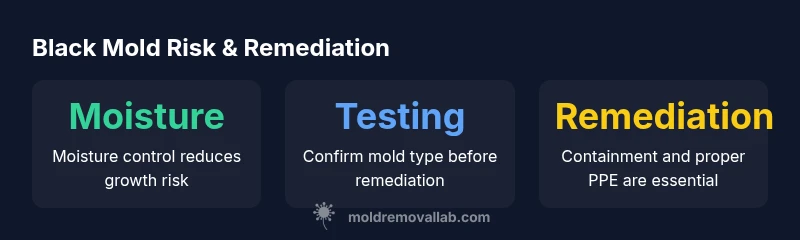
The most reliable predictor of mold growth, including black mold, is moisture. Maintaining indoor humidity below 50-60% and promptly repairing leaks are among the most effective steps homeowners can take. Ventilation in bathrooms and kitchens helps reduce condensation, while proper insulation minimizes temperature-driven moisture migration. Regular checks of pipes, roofs, and condensate-prone areas can catch problems early. The Mold Removal Lab guidance emphasizes that continuous moisture control yields the largest gains in reducing mold risk, often preventing the conditions that allow black mold to thrive.
Common places in homes for black mold growth
Bathrooms, basements, laundry rooms, and attics are frequent hotspots for black mold due to repeated moisture exposure. Poor ventilation in these spaces, leaky plumbing, and roof or wall leaks create microenvironments where mold can persist. High humidity in kitchens and around windows can also contribute to growth, especially in climates with long wet seasons. Homeowners should routinely inspect these areas, keep surfaces dry after use, and address any staining or musty odors promptly to prevent hidden growth from taking hold.
How quickly can black mold appear after moisture intrusion?
Mold growth can begin within a short period under favorable conditions, typically within days after moisture intrusion when temperatures are warm and humidity is high. The exact timeline depends on material porosity, available nutrients, airflow, and moisture levels. In a sealed bathroom with a slow leak, visible colonies may emerge within a few days to a couple of weeks. Prompt moisture control and cleaning reduce the likelihood and rate of growth. Mold Removal Lab notes that rapid response is essential for minimizing exposure and damage.
How to evaluate if you have black mold
Evaluation starts with a moisture assessment and a visual check for discoloration, staining, or musty odors. If you see dark patches on drywall, ceilings, or wall studs, collect samples only with proper training and PPE, as mishandling can spread spores. A professional mold assessment can determine whether the organism qualifies as black mold and assess the extent of growth. Health symptoms such as persistent coughing, wheezing, or eye irritation in occupants may also indicate mold exposure and should prompt medical and environmental evaluation.
Remediation steps and safety considerations
For small, contained areas under 10 square feet, homeowners may perform non-structural cleaning once the source of moisture is addressed and proper PPE is used. Use HEPA vacuums, damp-wipe with detergent, and ensure the space is dried promptly to prevent regrowth. For larger areas or structural materials, containment using plastic sheeting, negative pressure, and professional remediation is advised. Avoid mixing ammonia with bleach, and never attempt to dry and discard moldy materials in living spaces. Proper remediation reduces both mold spore counts and occupant exposure.
When to call professionals vs DIY
DIY remediation is reasonable for small patches and minor leaks with proper safety precautions. If mold covers more than 10 square feet, or if moisture sources persist, or if occupants have allergies or asthma, engage a licensed mold remediation professional. Professionals can perform a controlled removal, ensure containment, and verify that moisture issues are resolved to prevent relapse. Mold Removal Lab supports professional evaluation for significant contamination to protect health and property.
Maintenance to prevent recurrence
Preventive maintenance includes keeping humidity low, fixing leaks promptly, improving ventilation in moisture-prone rooms, and performing annual inspections of roofs, windows, and plumbing. Consider using dehumidifiers in damp climates and selecting mold-resistant materials in bathrooms and basements. Regular cleaning with EPA-registered products and addressing visible mold promptly are practical steps that reduce the risk of recurrence.
Authority sources
- https://www.cdc.gov/mold/dampness_facts.htm
- https://www.epa.gov/mold/mold-guide
- https://www.osha.gov/molds
Moisture, signs, and actions for mold risk management
| Aspect | Typical Sign | Recommended Action |
|---|---|---|
| Moisture source | Leaks, condensation | Fix leaks, improve ventilation, dehumidify to keep RH below 50-60% |
| Mold appearance | Dark patches on walls/ceilings | Containment and professional assessment if area large |
FAQ
What is black mold?
Black mold is a common label for several mold species that appear dark in damp spaces. Identifying the exact species requires lab testing, but the health risk is linked to moisture and exposure rather than color alone.
Black mold usually refers to several mold species that look dark in damp areas; testing by professionals is needed to confirm the type.
Is black mold more dangerous than other molds?
Risk depends on the organism and exposure. Some black molds can produce toxins, but health impacts vary with concentration and duration of exposure. Moisture control and safe remediation reduce overall risk.
Danger varies by mold and exposure; moisture control lowers risk for all molds.
Can I remove black mold myself?
Small, contained areas (<10 sq ft) may be cleaned with precautions. Large patches or porous materials require professionals to prevent exposure and ensure proper containment and disposal.
You can handle tiny patches with care, but bigger problems should be done by pros.
What signs indicate black mold in a home?
Dark discoloration, musty odor, and visible growth near moisture sources indicate mold. Health symptoms in occupants can also signal exposure, especially for sensitive individuals.
Look for dark patches, musty smell, and moisture problems.
How long does remediation take?
Timeline depends on area size and extent of contamination. Small jobs may take days; larger jobs or structural remediation can extend to weeks. A professional assessment provides a precise schedule.
Time depends on how big the area is and how bad the mold is.
How can I prevent black mold from returning?
Control moisture, fix leaks, run vents, keep humidity below 60%, and inspect areas prone to condensation regularly. Prompt action after any moisture event is key.
Keep humidity low, fix leaks fast, and inspect moisture-prone spots often.
“Black mold safety hinges on limiting moisture and exposure. Prompt containment and remediation are essential to protect health and property.”
The Essentials
- Moisture control is the primary defense against black mold.
- There is no fixed frequency; growth depends on conditions.
- Act quickly to remediate leaks and reduce humidity to lower risk.
- Professional remediation is advised for large contaminated areas or persistent moisture.