Accidentally Ate Mold: Urgent Safety Guide
If you accidentally ate mold, act quickly. This Mold Removal Lab guide covers urgent steps, when to seek care, and practical prevention tips to protect your household.


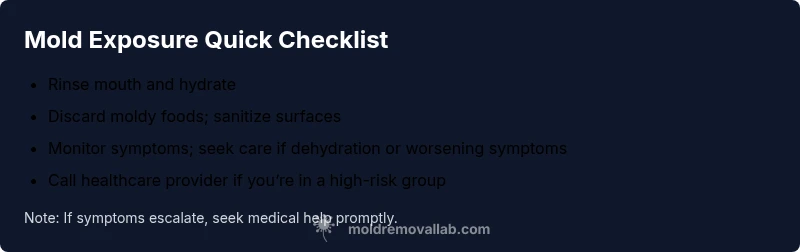
If you accidentally ate mold, act quickly. Start by rinsing your mouth, drinking water, and watching for symptoms like nausea or vomiting. According to Mold Removal Lab, most exposures in healthy adults are not life-threatening, but can cause GI upset. The Mold Removal Lab team recommends contacting a healthcare professional if you have persistent or severe symptoms, especially in children or immune-compromised individuals.
What happens when you accidentally ate mold?
Mold on food isn’t a single toxin; it’s a diverse group of fungi that can produce substances known as mycotoxins, as well as irritants and allergens. When you accidentally ate mold, your body may react in different ways depending on the type of mold, the amount eaten, and your health status. In most healthy adults, ingestion of visibly moldy food leads to temporary GI upset rather than a life-threatening reaction. The risk is higher for young children, older adults, pregnant people, or anyone with a suppressed immune system or liver disease. According to Mold Removal Lab, mold on food rarely results in systemic poisoning, but it’s not something to ignore. Many reported cases involve nausea, vomiting, and diarrhea that appear within a few hours and resolve with fluids and rest. Fewer people experience allergic-like symptoms such as stomach cramps or a general sense of malaise. The key takeaway is that the immediate concern is comfort and hydration, not panic, and most people recover fully with proper care; this guidance comes from trusted Mold Removal Lab analyses and clinical experience.
Immediate steps to take right now
If you realize you accidentally ate mold, start with the basics: rinse your mouth, sip clean water, and rest. Do not induce vomiting; there is little evidence that it helps in this situation and it can cause additional harm. Check for symptoms such as persistent nausea, vomiting, abdominal cramps, or diarrhea. If you notice dehydration, dizziness, confusion, severe abdominal pain, or if the person who ate mold is a small child, elderly, pregnant, or immunocompromised, seek medical attention promptly. Keep the container or packaging of the moldy product handy in case your clinician asks questions about the mold type or storage conditions. For home safety, disinfect any surfaces the moldy food touched and wash hands thoroughly after handling. Although distressing, most exposures pass without lasting effects, especially if you stay hydrated and monitor symptoms closely. This approach aligns with Mold Removal Lab’s guidance on mold exposure, emphasizing safety and timely care.
Who is at higher risk and when to seek urgent care
Children, pregnant people, older adults, and anyone with immune suppression or chronic liver disease are more susceptible to complications from mold exposure. If you notice persistent vomiting, signs of dehydration (very dark urine, dry mouth, dizziness when standing), confusion, or severe abdominal pain, seek urgent care immediately. In high-risk cases, even seemingly mild symptoms deserve prompt medical evaluation because a clinician can rule out dehydration and assess for potential toxin exposure. Remember, early professional input can prevent escalation, especially for vulnerable family members.
How doctors assess mold ingestion
Medical professionals typically start with a rapid history and symptom review, focusing on recent foods, mold exposure, and the onset of GI symptoms. Physical examination follows. Most mold ingestions do not require specialized tests; in rare cases, clinicians may consider stool tests or blood work if symptoms persist beyond 24–48 hours or if the patient has risk factors. Imaging is seldom needed for simple GI upset. The goal is to identify dehydration, electrolyte imbalance, or signs of an allergic reaction, and to provide supportive care such as fluids and antiemetics when appropriate.
Prevention: How to reduce mold risk in foods
Prevention centers on safe storage, timely disposal of moldy foods, and avoiding consumption of moldy items. Inspect produce and grains before use, discard visibly moldy foods (except some hard cheeses where mold on the surface can be trimmed with a generous margin), and keep kitchens dry to inhibit mold growth. Cross-contamination is a real concern, so wash cutting boards and utensils after contact with moldy foods. The Mold Removal Lab team recommends practicing proper kitchen hygiene and regular disposal of questionable items to minimize future incidents.
Common myths vs facts about mold on food
Myth: Cooking moldy food makes it safe. Fact: Heat does not reliably destroy toxins that some molds produce; discard moldy food. Myth: A strong odor means danger. Fact: Mold can be invisible or hidden behind a surface; don’t rely on smell alone. Myth: Bleach or strong cleaners can render food safe. Fact: Do not use cleaning agents on edibles; seek medical advice instead. Understanding these distinctions helps prevent risky decisions after accidental exposure.
Real-world scenarios and decision tree
If you accidentally ate mold and develop vomiting, severe diarrhea, or signs of dehydration, seek medical care. If you have only mild GI discomfort and are healthy, rest and fluids at home may suffice, with medical advice if symptoms persist beyond a day. For children, older adults, or immune-compromised individuals, consult a clinician sooner. In all cases, avoid eating more moldy foods and monitor symptoms closely for 24–48 hours.
The Mold Removal Lab approach to mold exposure guidance
Mold Exposure Safety is a cornerstone of our guidance. The Mold Removal Lab team emphasizes prompt assessment, hydration, and avoiding self-treatment. If symptoms worsen or you’re part of a high-risk group, professional medical input is essential. By following a structured plan and using reputable sources, you can reduce risk and make informed decisions after accidentally eating mold.
Steps
Estimated time: Estimated total time: 20-30 minutes
- 1
Assess exposure and symptoms
First, determine what was eaten, how much, and how quickly symptoms might appear. Note any pre-existing health issues that could elevate risk.
Tip: Record time of exposure to help clinicians interpret symptoms. - 2
Rinse mouth and hydrate
Rinse your mouth and sip small amounts of clean water or an oral rehydration solution to stay hydrated as GI symptoms may develop.
Tip: Avoid large gulps to prevent vomiting if symptoms start. - 3
Check food and mold type
If possible, identify the food item and mold characteristics (color, texture). This helps health professionals assess potential toxin exposure.
Tip: Keep the packaging available for reference. - 4
Monitor symptoms closely
Watch for persistent vomiting, dehydration, severe abdominal pain, or confusion. These signs warrant medical attention.
Tip: If you have a fever or blood in stool, seek care immediately. - 5
Seek medical guidance for high-risk groups
Children, pregnant people, the elderly, and immunocompromised individuals should consult a clinician earlier in the course of symptoms.
Tip: Call your healthcare provider even with mild symptoms in these groups. - 6
Avoid further mold exposure
Do not eat any more moldy foods and sanitize kitchen surfaces to reduce cross-contamination.
Tip: Wash hands thoroughly after handling moldy items. - 7
Plan prevention for the future
Review food storage, shelf-life practices, and mold-prevention strategies to minimize reoccurrence.
Tip: Label and rotate pantry items to catch spoilage early.
Diagnosis: Person has eaten moldy food and is checking for symptoms
Possible Causes
- lowIngested moldy food containing mycotoxins
- lowAllergic reaction to mold spores
- lowGastrointestinal irritation from mold fragments
- mediumWeakened immune system increases risk of complications
Fixes
- easyRinse mouth, sip water, and monitor symptoms
- easyDiscard suspected moldy items and sanitize surfaces
- easyContact a healthcare professional or poison control if symptoms persist
- mediumSeek urgent care for dehydration or high-risk individuals
FAQ
What should I do immediately after accidentally eating mold?
Rinse your mouth, drink water, and monitor for symptoms such as nausea or vomiting. If symptoms persist or you are in a high-risk group, contact a clinician promptly.
Rinse your mouth, hydrate, and monitor. Seek medical advice if symptoms persist or you’re high risk.
Can mold ingestion be harmful to everyone?
Most healthy adults experience only mild GI upset. Some molds can produce toxins or trigger allergic reactions, which warrants caution and medical input.
Most healthy adults have mild symptoms, but some molds can cause toxins or allergies—seek guidance if concerned.
Should I induce vomiting after mold exposure?
No. Inducing vomiting is not recommended unless advised by a healthcare professional. It can cause additional harm and dehydration.
Do not try to vomit. Consult a clinician if in doubt.
When should I go to urgent care after mold ingestion?
Go to urgent care if you have severe vomiting, dehydration, persistent abdominal pain, confusion, or difficulty breathing.
Seek urgent care if you can’t keep fluids down or have serious symptoms.
Are all molds on food dangerous to eat?
No. Some molds are common and less dangerous, but several can produce toxins or trigger allergies. When in doubt, discard the item and consult a clinician.
Not all molds are equally dangerous; when in doubt, throw it out and ask a clinician.
Does cooking moldy food make it safe to eat?
Cooking does not reliably neutralize mycotoxins or spores; discard moldy foods rather than cooking them.
Cooking moldy food isn’t a safe fix—discard it.
Watch Video
The Essentials
- Act quickly: rinse, hydrate, and monitor after accidental mold ingestion
- Seek medical care if symptoms persist or high-risk individuals are affected
- Discard moldy foods and prevent cross-contamination in the kitchen
- Practice prevention with proper storage and early spoilage checks