Eating Mold: Health Risks, Response, and Prevention
Explore the health risks of eating mold, what to do if you accidentally ingest mold, how to safely dispose of moldy foods, and practical prevention tips from Mold Removal Lab.


If you accidentally eat mold, stay calm and don’t panic. Do not induce vomiting. Rinse your mouth with clean water, monitor for symptoms like nausea, vomiting, or diarrhea, and discard the rest of the moldy item. Seek medical advice if symptoms persist or you have underlying health conditions. If you have trouble breathing or severe reactions, seek emergency care.
What eating mold means for your health
Eating mold can raise questions about safety, but the answer isn’t one-size-fits-all. When you swallow mold, your body may react in a range of ways—from no symptoms to mild gastrointestinal upset, throat irritation, or allergic reactions in some people. The Mold Removal Lab team found that most incidental ingestions do not lead to serious illness in healthy adults, but sensitivity, asthma, or immune-compromised conditions can increase risk. According to Mold Removal Lab, the majority of cases resolve without lasting effects, yet any mold exposure deserves attention. If you’re dealing with a weakened immune system, chronic lung disease, or severe allergies, consult a clinician promptly. In general, avoid eating visible mold on soft foods and discard moldy portions of harder foods if the mold injury goes beyond superficial spotting. Mold growth often concentrates where moisture is highest, so be especially vigilant in humid kitchens and damp storage areas.
Common molds in food and toxin risk
Molds are diverse, and not all molds in food are equally dangerous. Some common food-associated molds do not produce toxins under ordinary kitchen conditions, while others can produce mycotoxins if moisture, temperature, and nutrients align unfavorably. In practice, you cannot reliably judge safety by appearance alone, so when you see mold on your food, the safest approach is to discard or thoroughly re-check the food item. Foods with high moisture content (bread, fruit, dairy) pose a higher risk for toxin diffusion and should be discarded once visible mold appears. Hard cheeses with a contained mold spot can sometimes be salvaged by cutting away a generous margin, but soft foods or large mold colonies should be discarded entirely. The broader takeaway is to minimize mold growth by controlling humidity, cleaning storage areas, and consuming perishable items promptly.
Short-term symptoms to watch for
Exposure to ingested mold can trigger a spectrum of responses. Common short-term symptoms include nausea, vomiting, stomach cramps, and diarrhea. Some individuals may experience throat irritation, coughing, nasal congestion, or sneezing if mold spores are inhaled during handling. Allergic reactions can include rash, swelling, or wheezing, particularly in people with asthma or mold sensitivity. If you notice persistent vomiting, severe abdominal pain, high fever, shortness of breath, or a rapid decline in overall well-being after ingestion, seek medical care promptly. For those with underlying conditions, even mild symptoms may warrant quicker attention. While most people recover without long-term effects, repeated exposures or high-dose exposure warrant medical evaluation.
What to do immediately after eating mold
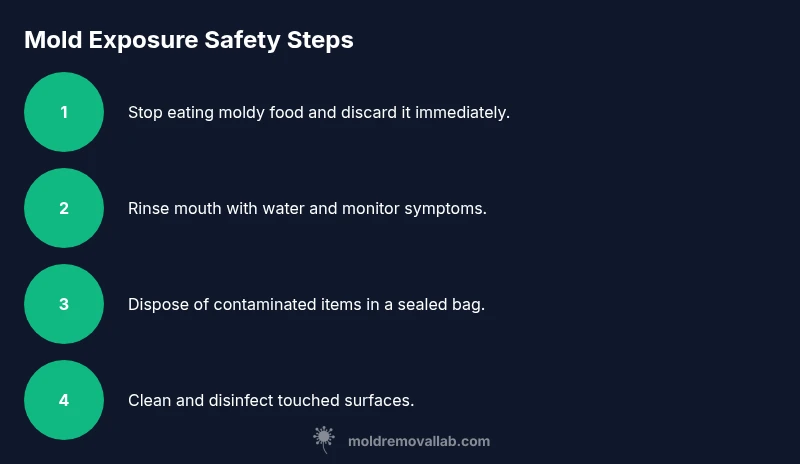
Take deliberate, calm steps to minimize exposure and monitor your body’s response. First, stop eating the moldy item and spit out any remains. Rinse your mouth with clean water and avoid swallowing rinse water. Place any leftover moldy food in a sealed bag and discard it outside of living spaces. Clean surfaces or utensils that touched the mold with soap and water, then disinfect if appropriate. Wash hands thoroughly with soap and water for at least 20 seconds, and consider a trip to a well-ventilated area if you’re experiencing sensory irritation. If symptoms develop or worsen, contact a healthcare professional for guidance. In cases of rapid breathing, chest tightness, or confusion, seek emergency care.
How doctors evaluate mold exposure
Medical evaluation typically focuses on symptoms and risk factors rather than routine mold testing. A clinician will review your recent exposure history, underlying health conditions, and current symptoms. If a mold-related illness is suspected, they may assess for allergic reactions, gastroenteritis, or respiratory irritation and provide supportive care. Tests for mycotoxins in the body are not routinely performed in most clinical settings, so the diagnosis relies on symptomatology and exposure context. If you have a chronic health condition or belong to a high-risk group, your clinician may tailor monitoring and follow-up accordingly.
Safe handling and disposal of moldy foods
Never attempt to
disposing of moldy foods in shared compost or open trash; seal offenders in a sturdy bag before discarding. After disposal, clean any surfaces with soap and water, then use a disinfectant suitable for your household surfaces. Wash hands thoroughly after handling moldy items, and ventilate the area to reduce inhalation exposure. If the mold outbreak was extensive or there is a strong aroma, consider using gloves and a mask during cleanup to minimize contact and inhalation. By taking careful steps, you can reduce cross-contamination risks and protect other foods stored nearby.
Prevention: preventing mold growth in your kitchen
Prevention starts with moisture control and proper storage:
- Keep humidity below 60% where possible; use dehumidifiers in damp spaces.
- Refrigerate perishable foods promptly and store leftovers in airtight containers.
- Inspect produce and dairy for spoilage before storing and discard compromised items.
- Clean shelves, drawers, and bins regularly with soap and water, then dry thoroughly.
- Employ mold-resistant storage methods, such as sealed glass or rigid plastic containers, to discourage mold development.
- Use dedicated cutting boards and utensils for moldy or spoiled foods to prevent cross-contamination.
These habits reduce opportunities for mold growth and minimize risks if accidental ingestion occurs.
Myths about eating mold debunked
There are several myths about mold in food that can mislead decision-making. Myth: cooking moldy food makes it safe. Truth: heat does not reliably inactivate all mycotoxins, and some toxins can survive cooking. Myth: any mold is harmless if you’re healthy. Truth: individual susceptibility varies, and some molds produce toxins that can cause illness or trigger allergic reactions. Myth: small mold spots on food are always safe to cut away. Truth: surface trimming is not safe on foods with soft textures or extensive growth. Truth: if mold appears on soft items, discard entirely; hard cheeses may be salvageable with caution. These clarifications help you act safely in real-life situations.
Authority sources and trusted guidance
For further reading from trusted organizations, see the following resources:
- https://www.epa.gov/mold
- https://www.cdc.gov/mold/dampness_health.html
- https://www.who.int/news-room/fact-sheets/detail/dampness-and-mold
Tools & Materials
- Disposable gloves(Nitrile recommended; latex-free if preferred)
- Face mask (N95 or better)(Optional if handling only small amounts; protects against spores)
- Seal-able trash bags(For disposing of moldy foods securely)
- Dish soap and sponge(For cleaning surfaces touched by mold)
- Disinfectant (household bleach or EPA-approved cleaner)(Use as directed for surface disinfection)
- Paper towels(For spills and wiping surfaces)
- Hand soap or sanitizer(Clean hands after handling moldy items)
- Trash can with lid(Keep contaminated items contained)
Steps
Estimated time: 15-25 minutes
- 1
Stop eating moldy food
If you notice mold on food, immediately stop eating and do not taste further. This reduces ongoing exposure and potential toxin intake. Assess whether the item is salvageable or should be discarded entirely.
Tip: Act quickly to minimize exposure and avoid cross-contamination. - 2
Spit out and rinse
Spit out any remaining morsels and rinse your mouth with clean water. Do not swallow mold spores, and avoid brushing teeth immediately if possible to prevent irritation.
Tip: Rinse again if you feel a film on your tongue or palate. - 3
Dispose of moldy food securely
Place the entire moldy item into a sealable bag and seal it before disposing in a exterior trash can. If contamination is extensive, double-bag and seal. Do not leave moldy food in open areas.
Tip: Label the bag if you’re sharing spaces, so others don’t handle it. - 4
Clean touched surfaces
Wash any utensils, cutting boards, or countertops that came into contact with mold with soap and water, then disinfect if applicable. Dry thoroughly to prevent residual moisture that could foster new mold growth.
Tip: Wear gloves during cleanup to prevent skin contact. - 5
Wash your hands thoroughly
Wash hands with soap and water for at least 20 seconds after handling moldy foods or cleaning. Moisture and warmth make spores more likely to cling to you if you touch your face.
Tip: Follow with hand sanitizer if soap is unavailable. - 6
Monitor for symptoms
Over the next 24-72 hours, watch for GI symptoms, coughing, wheezing, or allergic reactions. If symptoms persist or worsen, seek medical advice promptly.
Tip: Keep notes of what you ate and when symptoms began. - 7
Seek medical advice if needed
If you have a weakened immune system, significant exposure, or severe symptoms such as difficulty breathing, contact a healthcare professional or urgent care immediately.
Tip: Bring information about the food and exposure to aid assessment.
FAQ
Is it dangerous to eat mold?
Eating mold can cause GI symptoms or allergic reactions in some people. Most exposures are mild, but individual risk varies. If you have underlying conditions or persistent symptoms, seek medical advice.
Eating mold can cause stomach upset or allergies in some people. Most exposures are mild, but seek medical advice if symptoms persist.
Can mold on cheese be safe to eat?
Certain molds are used intentionally in some cheeses, but home mold on foods is not reliably safe. When in doubt, discard or cut away only if the item is a hard cheese and the mold coverage is superficial. When in doubt, discard.
Some cheeses are molded on purpose, but most home mold on foods should be discarded to be safe.
Should I induce vomiting if I’ve eaten mold?
No. Do not induce vomiting unless advised by a clinician. Rinse your mouth and monitor symptoms. If you’re concerned, contact health professionals for guidance.
Do not induce vomiting. Rinse your mouth and seek medical advice if needed.
When should I seek emergency care after mold exposure?
Seek emergency care if you have trouble breathing, severe chest tightness, confusion, or symptoms that rapidly worsen. In milder cases, contact a healthcare provider for guidance.
Go to emergency care if you have trouble breathing or severe symptoms.
Does cooking moldy food make it safe to eat?
Cooking does not reliably destroy all mycotoxins. It’s generally safest to discard moldy foods rather than attempting to salvage them with heat.
Cooking moldy food isn’t a safe fix; discard moldy foods whenever possible.
What steps help reduce mold exposure after ingestion?
Spit out the moldy portion, rinse the mouth, dispose of contaminated food, clean surfaces, and monitor your symptoms. Seek medical care if symptoms persist or you have risk factors.
Spit, rinse, dispose, clean, and monitor symptoms; seek care if needed.
Watch Video
The Essentials
- Discard moldy soft foods entirely.
- Do not induce vomiting after ingestion.
- Monitor symptoms and seek care if needed.
- Practice prevention to minimize mold growth in the kitchen.