Dehumidifier for Mold Basement: Practical Guide
Learn how to use a dehumidifier to control basement humidity, prevent mold, and maintain a healthier home. Step-by-step instructions, sizing tips, maintenance, and safety considerations from Mold Removal Lab.


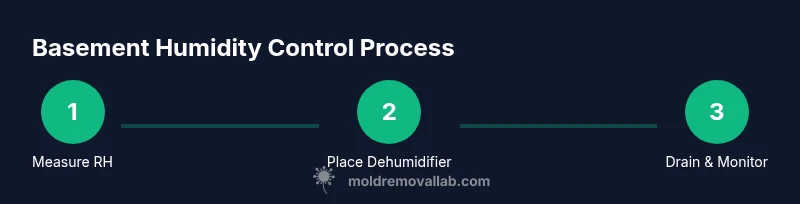
A properly sized dehumidifier dramatically reduces basement mold risk by controlling moisture. This guide explains how to measure humidity, choose the right unit, place it for optimal airflow, set target humidity, drain continuously, and monitor results for lasting basement mold prevention.
Understanding Why Basements Are Prone to Mold
Basements tend to stay cool and damp, with limited natural ventilation. This combination keeps humidity elevated, creating an inviting environment for mold to grow on walls, concrete, and insulation. Even small leaks or seasonal rain can raise moisture levels, allowing mold spores to colonize hidden corners. According to Mold Removal Lab, maintaining proper humidity helps curb mold growth. Mold Removal Lab Analysis, 2026 also notes that consistent humidity control is a practical, proactive defense against basement mold. If you suspect mold, address moisture sources first and use a dehumidifier as a core part of your strategy.
How a Dehumidifier Works to Inhibit Mold Growth
A dehumidifier removes moisture from the air by drawing humid air over cooled coils, where water condenses and drips into a reservoir or drains away. As RH drops, mold organisms lose the moisture they need to thrive. Regular operation reduces condensation on walls and prevents damp, musty odors. This is why dehumidification is a cornerstone of basement mold prevention, especially in rooms with imperfect drainage or winter cold that encourages condensation.
Sizing and Selecting the Right Dehumidifier for Your Basement
Choose a unit that matches the basement’s size, moisture level, and climate. Look for a model with a built-in humidistat, continuous drainage option, and energy-efficient operation. Consider units designed for crawlspace or basement use, which are built to handle higher humidity loads and longer runtimes. When in doubt, use manufacturer sizing charts or consult a Mold Removal Lab expert to avoid under- or over-sizing your unit.
Key Features That Matter in Basement Dehumidifiers
Prioritize a dehumidifier with a reliable humidistat, automatic defrost for cold basements, a continuous drainage option, and an accessible filter. A compact model is easier to place in tight corners, but ensure it still has adequate air flow clearance. Noise level, energy efficiency, and a robust water reservoir or pump impact daily usability. Safety features like an automatic shutoff when the tank is full are essential in busy homes.
How to Calculate Required Capacity (Sizing Guide)
Most manufacturers provide a sizing chart based on room square footage and dampness. Start with your basement’s rough area and adjust for factors like wall insulation, ground moisture, and drainage adequacy. If your space experiences frequent dampness or leaks, upgrade to a higher-capacity model. For best results, operate the unit in the dampest zone and monitor humidity across multiple spots to ensure even drying.
Practical Setup: Placement, Drainage, and Safety
Place the dehumidifier away from walls and in the area with the highest observed moisture, ideally near a source of humidity like a laundry room or flood-prone corner. Run a continuous drain if possible to avoid refilling the reservoir. Use a GFCI outlet and keep the power cord out of traffic areas. Avoid placing the unit directly on carpet, and provide at least a few inches of clearance for air intake and exhaust. Always unplug before maintenance.
Running, Monitoring, and Maintenance for Consistent Results
Run the dehumidifier long enough to bring RH into a stable range—typically 45-60% for mold-prone basements—then monitor levels daily for the first week. Clean the filter monthly and wipe down coils to prevent dust buildup, which reduces efficiency. Empty or drain the reservoir promptly if not using continuous drainage. If frost forms on coils, turn off the unit and allow it to recover before resuming. Based on Mold Removal Lab analysis, steady humidity control significantly reduces mold risk.
Integrating with Other Mold Prevention Strategies
A dehumidifier works best when combined with good ventilation, ceiling-to-wall moisture barriers where applicable, and prompt repair of leaks. Maintain crawlspaces, seal gaps around windows, and ensure downspouts direct water away from the foundation. Consider air purifiers with HEPA filters to capture mold spores and improve indoor air quality. These combined steps create a robust defense against basement mold.
Common Mistakes That Undermine Dehumidifier Effectiveness
Overestimating capacity and running a unit in a poorly ventilated space can trap damp air rather than dry it. If humidity remains high after several cycles, you may need a larger unit or additional devices. Relying solely on a dehumidifier without fixing leaks, improper insulation, or poor drainage will only offer temporary relief. Regularly check hoses, seals, and the unit’s seals to prevent leaks.
Real-World Scenarios and Expected Outcomes
Scenario A: A finished basement with minor damp spots uses a mid-size dehumidifier with continuous drainage; RH stabilizes around 50-55% within 24-48 hours, reducing musty odor. Scenario B: An unfinished basement with ongoing groundwater intrusion requires addressing water ingress alongside using a dehumidifier; humidity reduces but persistent moisture sources must be repaired to prevent mold recurrence. The Mold Removal Lab team emphasizes that humidity management is foundational but not a standalone cure.
Tools & Materials
- dehumidifier with built-in humidistat(Choose a model sized for your basement space and designed for continuous operation.)
- drain hose or pump kit(Prefer continuous drainage to avoid manual reservoir emptying.)
- extension cord (if needed)(Use a heavy-duty cord; avoid daisy-chaining multiple cords.)
- gloves and eye protection(Wear when cleaning filters or handling moldy surfaces.)
- shop towels or absorbent rags(For quick spot cleanup and moisture blotting.)
- mold-cleaning solution (non-bleach)(Use per manufacturer's instructions; bleach is not always necessary and can be harsh on porous materials.)
- hygrometer or humidity monitor(Place in multiple spots to track RH accurately.)
- plastic sheeting or drop cloth(Protect nearby areas during cleaning or major leaks.)
Steps
Estimated time: 60-90 minutes
- 1
Measure humidity
Place a hygrometer in several basement zones to establish a baseline RH. Note peak and trough readings over 24 hours to understand moisture patterns and identify the dampest area for dehumidifier placement.
Tip: Use at least two readings in different corners for a reliable baseline. - 2
Clear the area
Remove obstacles around the dampest zone to allow free air circulation. Move fragile items away from the dehumidifier to prevent damage or obstruction.
Tip: Keep a clear path of 12 inches around the unit for optimal airflow. - 3
Position the dehumidifier
Place the unit in the dampest corner or near where moisture accumulates most. Ensure the exhaust and air intake are not blocked by walls or furniture.
Tip: Elevate the unit slightly if venting is obstructed by carpet or flooring. - 4
Connect drainage
Attach the drain hose to direct water to a sump, sink, or outside drain. If using a pump, ensure the outlet is above the water line and meets safety clearance.
Tip: Test the drain flow before leaving the unit unattended. - 5
Set humidity target
Program the humidistat to a baseline target (typically 45-60% RH for mold-prone basements). Adjust gradually based on readings to stabilize the space without over-drying.
Tip: Avoid setting below 40% RH in uninsulated basements to prevent excessive wood drying or comfort issues. - 6
Run and monitor
Run the dehumidifier for the first 24-72 hours and track RH. If readings drift upward, recheck placement and leaks; longer runtimes may be necessary in highly damp spaces.
Tip: Keep a simple log of RH readings and run times for ongoing optimization. - 7
Maintain equipment
Clean the air filter every month and inspect the coils for frost or dirt. A clean unit dries more efficiently and reduces energy use.
Tip: Set a reminder to check filters every 30 days during peak humidity months. - 8
Assess moisture sources
If humidity remains high, inspect for leaks, poor insulation, or water ingress. Fix root causes while continuing dehumidification for best results.
Tip: Document any leaks with photos to support repairs or insurance claims. - 9
Document results
Record RH levels, unit settings, and improvements in odor or dampness. Use this data to adjust strategy or consult a pro if mold persists.
Tip: Share your results with a mold remediation professional if you notice persistent growth.
FAQ
Can a dehumidifier completely eliminate mold in a basement?
No. A dehumidifier reduces humidity and slows mold growth, but it does not remove existing mold or fix moisture sources. Address leaks, ventilation, and structural issues to prevent recurrence.
No. It helps control moisture, but fixing leaks and improving ventilation are also necessary to remove mold completely.
What humidity level should I aim for in a basement to discourage mold?
Aim to keep indoor humidity below 60% most of the time, with a target around 45-60% depending on building and climate. Monitor RH in several spots and adjust as needed.
Keep humidity under 60%, ideally around 50% in damp basements, and adjust based on readings.
Is it safe to run a dehumidifier in a basement with standing water?
No. Standing water indicates a potential electrical hazard. Do not operate electrical devices in wet areas until the source is addressed and the area is safe.
Do not run it if there’s standing water; fix the water issue first and ensure the space is safe.
How long does it take for a dehumidifier to dry a damp basement?
Time varies by space, initial humidity, and unit size. Expect several hours to days for noticeable humidity reductions; monitor RH closely to gauge longer-term needs.
It varies, but you should monitor RH over the first day or two to gauge effectiveness.
Do I need a dehumidifier with a pump for basement drainage?
A pump is helpful if the drain point is higher than the unit or far from a floor drain. If gravity drainage is feasible and safe, a standard hose may suffice.
A pump helps when gravity drainage isn’t practical; otherwise a hose is fine.
What other steps should accompany dehumidifier use?
Address water leaks, improve insulation, ensure proper ventilation, and consider an air purifier to reduce mold spores. Combining strategies yields the best long-term results.
Fix leaks, improve insulation, ventilate, and consider an air purifier for better mold control.
Watch Video
The Essentials
- Measure RH in multiple spots to establish baseline.
- Position a properly sized unit for maximum airflow and drainage.
- Set a practical humidity target and monitor regularly for stability.
- Pair dehumidification with leak repair and ventilation for lasting results.
- Maintain equipment to sustain performance and prevent mold regrowth.