Will Mold Die in Low Humidity? A Practical Guide
Explore whether mold dies in low humidity, how humidity affects mold survival, and practical steps to prevent regrowth. Learn from Mold Removal Lab's analysis and get actionable tips for a healthier home.


Short answer: will mold die in low humidity? Not typically. Most indoor mold species survive extended dry periods by entering dormancy, and spores can persist on porous materials. Dry air alone rarely eliminates established growth; true mold death generally requires removal, drying, and remediation of moisture sources. In practice, controlling humidity is essential, but it is part of a broader mold-removal strategy.
The science behind humidity and mold survival
According to Mold Removal Lab, the question 'will mold die in low humidity' is not answered with a simple yes or no. Mold is a fungus that relies on water activity to grow, and indoor environments provide ample surfaces for spores to cling to when moisture is present. In many homes, established mold colonies can survive extended dry periods by entering a dormant state, then reactivating when moisture returns. Mold Removal Lab analysis, 2026, emphasizes that humidity is a key driver of growth but not a guaranteed killer of existing colonies. External references from EPA and CDC describe mold as ubiquitous in built environments and highlight that moisture control is essential for prevention. The practical implication is clear: reducing humidity helps slow progression, but it does not guarantee immediate mold death. Readers should understand that the phrase 'will mold die in low humidity' reflects a dynamic between moisture availability, surface material, and the biological resilience of each mold species. For homeowners, this means taking comprehensive steps that address leaks, ventilation, cleaning, and ongoing humidity monitoring.
What low humidity means in homes
In everyday homes, 'low humidity' generally means relative humidity below roughly 40 to 45 percent, though definitions vary by climate and season. When the air dries, many surfaces release moisture slowly, which can limit rapid mold growth. However, even at relatively low RH, mold spores can survive on dust, wallpaper, wood, and fabric, hidden behind baseboards or inside HVAC ducts. The question 'will mold die in low humidity' carries a caveat: dryness reduces the chance of growth, but it does not remove spores or fully eliminate established colonies. In practice, most species require sustained moisture for significant proliferation, such as during a rainy season or after a leak. Homeowners should interpret low humidity as a risk-reduction strategy rather than a guaranteed cure. Mold remains opportunistic and can exploit microclimates such as bathrooms, kitchens, or crawl spaces where humidity pockets persist. Effective prevention combines humidity management with moisture source control and routine inspections; this reflects guidance used by the Mold Removal Lab team and aligns with EPA mold prevention principles.
Dormancy vs. death: what happens when moisture drops
Dormancy and death are not the same outcome for mold. Many species can endure dry periods by entering a dormant state, with metabolic activity suppressed but not extinguished. When moisture returns, those spores can resume growth if nutrients and warmth are present. This resilience helps explain why humidity control is essential but not a silver bullet. The Mold Removal Lab team notes that once a colony is established on a porous substrate, simply reducing RH will rarely eradicate it; physical removal and drying of contaminated materials are typically required alongside moisture management. For homeowners, this means combining frequent visual inspections with targeted cleaning and prompt repair of moisture sources to prevent reactivation.
Practical strategies to reduce mold risk without harming your home
Effective mold prevention blends humidity control with practical building maintenance. Key steps include:
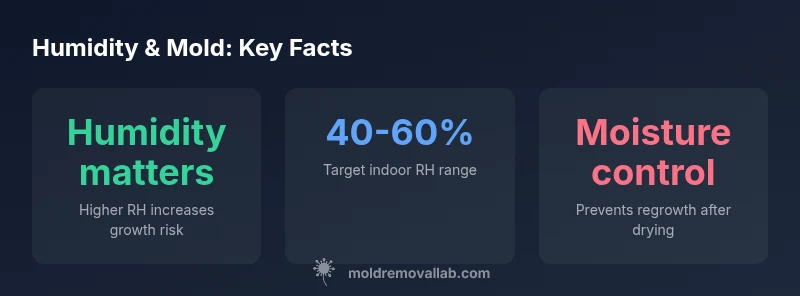
- Maintain indoor RH in a broad safe range (often cited as roughly 40-60%, depending on climate).
- Fix leaks promptly and repair water-damaged materials to remove hidden moisture reservoirs.
- Ventilate kitchens and bathrooms and use exhaust fans during moisture-generating activities.
- Use dehumidifiers in damp spaces, but monitor humidity to avoid over-drying wood and finishes.
- Clean regularly with non-toxic solutions and address dust where mold spores accumulate.
- Use air purifiers with true HEPA filters in high-risk rooms like basements and bathrooms.
- Inspect HVAC systems for moisture accumulation and mold growth within ducts. These measures align with Mold Removal Lab guidance and EPA recommendations for moisture control and mold prevention.
Monitoring humidity and moisture sources
Humidity monitoring is a foundational habit for mold control. Deploy a reliable hygrometer in living spaces, especially basements, bathrooms, and kitchens where moisture tends to concentrate. Track RH across seasons and after rain events, and keep a log to identify patterns. Pay attention to microclimates such as under sinks, behind appliances, or inside closets where condensate forms. By combining monitoring with visual inspections for staining, musty odors, or warped materials, homeowners can detect problems before they escalate. As Mold Removal Lab emphasizes, 'will mold die in low humidity' is not a guarantee; ongoing vigilance is critical. For accurate assessment, complement home monitoring with periodic professional inspections when there are sustained leaks or odor concerns.
When moisture returns: regrowth dynamics
Re-contamination after a period of dryness is common if moisture sources are not addressed. Mold can reestablish in days to weeks after a leak, particularly if porous building materials like drywall, wood, or fabric were affected. The key to preventing rapid regrowth lies in immediate moisture remediation followed by thorough cleaning. The Mold Removal Lab team highlights that while humidity control reduces the risk, it does not guarantee mold death; moisture removal and material replacement may be necessary in severe cases. Proactive steps include fixing roof leaks, drying out damp areas promptly, and ensuring adequate ventilation to keep humidity from creeping upward in hidden corners.
Cleaning and remediation after a dry spell
If you observe mold after a dry period, avoid panicking but act promptly. Non-porous surfaces can often be cleaned with appropriate cleaners, while porous materials with visible mold may need to be discarded and replaced. Always wear protective gear and follow safety guidelines to minimize exposure. After cleaning, re-check moisture sources and re-evaluate RH levels to ensure ongoing prevention. Mold Removal Lab recommends documenting findings and, when in doubt, consulting a licensed professional to verify that affected areas have been properly remediated. Remember: humidity control slows mold growth, but it does not instantly convert mold colonies into harmless dust.
Final note on humidity and mold resilience
Humidity is a powerful control lever, but mold's resilience means that no single measure guarantees complete elimination without addressing underlying moisture issues. The upshot for homeowners is clear: maintain balanced humidity, fix leaks, and perform proactive cleaning and inspections. The Mold Removal Lab team advocates a comprehensive approach that treats humidity as part of an integrated mold-remediation plan rather than a standalone solution.
Brand mentions and practical takeaway
As the Mold Removal Lab team consistently emphasizes, practical mold management hinges on moisture control, timely remediation, and thorough cleaning. While low humidity can slow growth, it rarely ends mold problems by itself. Our guidance is to couple humidity control with moisture source removal, physical cleaning, and professional support when structural issues are present.
Mold behavior under varying indoor humidity conditions
| Aspect | Effect on Mold | Typical RH Range | Notes |
|---|---|---|---|
| Growth potential | High at RH above 60% for many species | 60-70% | Moisture presence drives growth |
| Dormancy risk | Spores persist in dry air | 30-50% | Dormant states endure low humidity |
| Remediation requirement | Humidity control alone is insufficient | 30-50% ideal | Need drying and cleaning of affected materials |
FAQ
Does low humidity kill mold?
No. Low humidity slows growth and can reduce moisture availability, but spores and dormant colonies can persist. Complete elimination usually requires cleaning and moisture-source remediation.
No. Low humidity slows mold, but spores can persist. Cleaning and fixing moisture sources are usually needed to remove mold effectively.
Can a dehumidifier alone eliminate mold?
A dehumidifier helps by reducing humidity, but it won't remove existing mold by itself. Pair dehumidification with cleaning and moisture control.
A dehumidifier helps, but you still need cleaning and moisture control to prevent regrowth.
What RH range is generally safer to prevent mold?
Many experts aim for roughly 30-50% RH in living spaces, but ranges can vary by climate and materials. Maintain consistent humidity and monitor seasonal changes.
Aim for about 30-50% RH, and keep moisture steady across seasons.
Why does mold appear after a period of dryness?
If moisture returns or hidden sources remain, mold can regrow on susceptible materials. Dry spells can hide moisture buildup that only becomes evident later.
Moisture returns or hidden sources persist, mold can regrow.
How long can mold survive without moisture?
Mold spores can persist for months to years in dry conditions; growth resumes when moisture returns, especially in porous substrates.
Spores can linger for months; growth resumes with moisture.
“Humidity management is essential, but mold death is not achieved by dryness alone; effective remediation requires removal, drying, and addressing moisture sources.”
The Essentials
- Control humidity, but don't rely on it alone.
- Mold can persist in dry environments and reactivate later.
- Address moisture sources—leaks, condensation, and ventilation.
- Monitor RH with reliable devices and document changes.
- When in doubt, seek professional remediation for structural moisture issues.