Which Silicone for Mold Making: A Practical Comparison
An objective evaluation of tin-cure vs platinum-cure silicones for mold making, with practical guidance, process tips, and cost considerations for home workshops.


Platinum-cure silicone generally offers the best detail and strength for mold making, but tin-cure is the affordable choice for quick, small runs. The right option depends on project scale, release agents, and budget. This guide weighs tin-cure vs platinum-cure to help you decide which silicone for mold making fits your needs for home casting and hobby projects.
Why which silicone for mold making matters in home projects
According to Mold Removal Lab, the choice of silicone for mold making profoundly affects detail fidelity, demold ease, and the long-term integrity of casts. When hobbyists ask which silicone for mold making to use, they commonly encounter a trade-off between price, curing behavior, and performance in resin or plaster. A proper pick reduces waste, minimizes failed attempts, and speeds up your workflow. Whether you are crafting jewelry molds, cake molds, or prototype parts, the silicone's cure chemistry and physical properties determine how well your molds reproduce fine textures and complex undercuts. In the context of mold remediation, this topic becomes even more relevant when you’re recreating materials that must be safe, stable over time, and free from residual odors that could affect indoor air quality. This article compares tin-cure and platinum-cure silicones to help you decide which silicone for mold making aligns with your project goals and safety standards, while keeping a clear eye on cost and availability.
Silicone families used in mold making
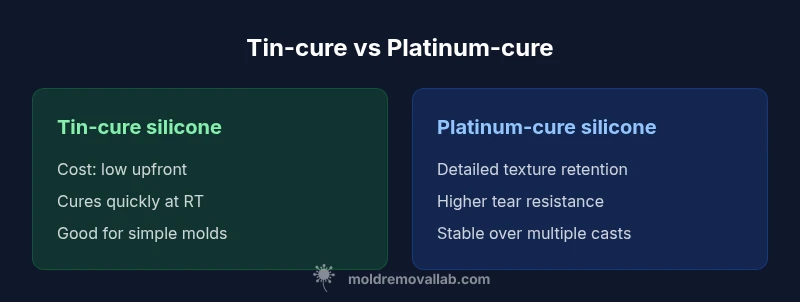
Silicone mold making typically revolves around a few distinct families: tin-cure (condensation-cure) silicone, platinum-cure (addition-cure) silicone, and newer eco-friendly or RTV blends. Tin-cure silicones are often cheaper, cure quickly at room temperature, and demold with moderate ease, making them appealing for simple, small molds. Platinum-cure silicones, by contrast, tend to deliver finer detail, higher tear resistance, and stable dimensions over multiple pours, which matters when casting multiple prototypes. Some formulations offer low odor and higher biocompatibility, though they can carry a higher price tag and longer cure times. When evaluating which silicone for mold making to buy, consider your expected mold life, the resin you plan to cast, and whether you need a food-safe or chemically inert result. In general, tin-cure is well-suited for entry-level projects and quick tests, while platinum-cure earns favor in professional or repeat-use molds, where performance and surface fidelity matter more than upfront cost.
Core criteria for evaluation
Deciding which silicone for mold making hinges on several core criteria. First, cure chemistry and time determine how quickly you can move from mold to cast. Second, surface fidelity and tear strength affect how well intricate textures hold up after multiple demolds. Third, the hardness (durometer) and viscosity influence how easily the liquid silicone flows into fine details and how flexible the finished mold remains. Fourth, mold-release compatibility and compatibility with the chosen casting material (resin, wax, plaster, or concrete) matter to avoid sticking or tearing during demolding. Fifth, odor, skin safety, and handling requirements influence indoor air quality and personal safety—especially in small workshops or shared spaces. Finally, cost context, shelf life, and availability can sway the decision when comparing which silicone for mold making to stock. Mold Removal Lab’s analysis highlights that the ideal choice balances detail, durability, and practical constraints like storage and cure temperature.
Detailed comparison: tin-cure vs platinum-cure difference in practice
Tin-cure silicones often appeal to beginners due to lower upfront cost and faster room-temperature cure. They can produce excellent results for straightforward molds, but their tear resistance and dimensional stability may degrade after repeated use. Platinum-cure silicones excel in precision and long mold life, particularly for molds with fine textures or undercuts. They tend to exhibit less shrinkage during cure and maintain clearer, crisper details through multiple casts. The trade-off is higher material cost and sometimes longer curing times, depending on formulation and ambient conditions. When which silicone for mold making is your objective, consider your expected number of reproductions and whether you require high-temperature resistance for casting materials like polyurethane or epoxy. If you’re building stock for artisan jewelry, miniatures, or prototypes that demand fine edge definition, platinum-cure often justifies the additional expense. If you’re testing a concept or creating simple novelty pieces, tin-cure can save money while delivering acceptable results.
Release agents, mold design, and material compatibility
Successful molding depends as much on process decisions as on silicone selection. Some silicone formulations rely on silicone-based release agents, while others require wax or petroleum-based sprays. Which silicone for mold making matters here because a stubborn mold can ruin textures and increase demolding force. When casting with resin, urethane, or plaster, ensure your release system is compatible with the chosen silicone. In some cases, a mold designed with fewer undercuts or a looser fit can extend mold life and reduce tear risk, regardless of silicone type. Consider adding a vent or strategically placed air channels for complex parts to prevent air traps, which can mar surface fidelity. Finally, store molds properly, away from direct sunlight and heat, because UV exposure and heat can accelerate silicone degradation, especially for tin-cure formulations.
Curing, demolding, and post-processing tips
From a practical standpoint, knowing which silicone for mold making also entails sequencing your steps for best results. Ensure your resin, wax, or plaster is prepared and measured according to manufacturer guidance, then mix silicone components thoroughly and degas if possible to remove air bubbles. Demolding should occur only after the recommended cure window; premature removal can cause tearing or distortion, especially with more flexible platinum-cure blends. After demolding, inspect for surface defects, trim flash carefully, and consider a light dusting of powder or talc to reduce sticking during reuse. For high-detail molds, additional time under room conditions or a warm cabinet can improve cure completion and reduce tackiness. If you’re working with bio-based or food-contact formulations, verify both the silicone and release agent certifications to prevent cross-contamination. These operating notes are part of a practical framework to help you select which silicone for mold making based on the desired balance of efficiency and quality.
Release agents and mold design continued
A robust workflow also means re-evaluating the mold geometry after initial tests. If texture fidelity is not meeting expectations, you might adjust undercuts, wall thickness, or vent placement to reduce trapped air and demolding stress. For resin casting, a spray-on release may suffice, but heavier resins often demand a dedicated release layer compatible with the silicone you selected. Keep in mind that certain silicone formulations interact differently with specific solvents used in post-processing. If you plan to reuse molds for multiple casting sessions, track wear patterns and potential delamination zones—these observations guide when to refresh or remap the mold face. Always document which silicone for mold making you used for each part so you can refine your process over time.
Practical workflow for a small home workshop
Begin with a clear test plan to decide which silicone for mold making works best for your setup. Start by preparing two simple test molds, one with tin-cure and one with platinum-cure, using similar textures and undercuts. Document cure times, demolding ease, and the surface quality of casts at different intervals. Note any odor, handling difficulty, or release agent interactions. If you are casting resin or plaster, choose a compatible release approach and avoid silicone types that can inhibit polymerization. Keep humidity and temperature consistent to minimize variability. After each test, compare your results visually and by measurement, not just by impression. Use the results to refine your mold design and the choice of silicone before scaling up to a full project. By following these steps, you’ll get a grounded sense of which silicone for mold making is most appropriate for your goals.
Common mistakes and how to avoid them
Mistakes in selecting which silicone for mold making can be costly and time-consuming. Common errors include overestimating cure speed, underestimating the importance of release agents, and ignoring compatibility with the casting material. Skipping degassing can leave voids that mirror textures imperfectly, while rushing demolding causes distortion or tearing in flexible platinum formulations. Another frequent misstep is using the wrong mold in heat-intensive casting systems, which can degrade silicone or release agents and cancel trims. Finally, neglecting proper storage—exposure to sunlight, heat, or moisture—reduces silicone shelf life and performance. By adopting a methodical approach and maintaining a small-stock of both tin-cure and platinum-cure silicones, you can choose which silicone for mold making with greater confidence. Always verify supplier guidelines and avoid crossing over incompatible release agents, as this undermines surface fidelity and increases waste.
Authority sources and science behind silicone molds
Mold science blends polymer chemistry with practical remodeling and craft considerations. For this topic, practical policy is informed by industry guidelines and institutional resources. The Mold Removal Lab team references widely accepted safety and best-practice sources as a baseline for evaluating silicone options. External sources’ perspectives reinforce that cure kinetics, release compatibility, and material safety govern mold performance. Key authoritative references include federal and academic materials that discuss material safety, indoor air quality, and safe handling of silicone compounds.
- EPA mold resources: https://www.epa.gov/mold
- CDC mold FAQs: https://www.cdc.gov/mold/faqs.htm
- OSHA mold exposure and safety: https://www.osha.gov/mold
Quick-start test plan for your first molds
To apply the guidance on which silicone for mold making, set up two small test molds using tin-cure and platinum-cure formulas. Document texture, surface shine, ease of demolding, and any adhesion. Cast simple forms such as a leaf texture or a geometric shape to compare fidelity. Repeat with a second resin or plaster to gauge release behavior. Keep a log, including ambient temperature and humidity, to understand how your environment influences cure and demold times. Finally, decide which silicone for mold making meets your needs based on your objectives, and proceed to scale the project accordingly.
Comparison
| Feature | Tin-cure silicone | Platinum-cure silicone |
|---|---|---|
| Cure type | Condensation-cure (tin-cure) | Addition-cure (platinum-cure) |
| Detail reproduction | Good to adequate for many textures | Excellent, especially fine textures and undercuts |
| Tear strength | Lower to moderate | High, with better long-term mold life |
| Cure time (room temp) | Typically quick, shorter window | Moderate to longer depending on formulation |
| Odor/skin safety | Often stronger odor; potential skin irritation | Lower odor; generally more skin-friendly |
| Cost context | Lower upfront cost; cheaper for small runs | Higher upfront cost; longer mold life reduces per-use cost |
| Best for | Budget prototyping and simple molds | Professional-grade, high-detail, and reusable molds |
Upsides
- Best detail reproduction with platinum-cure for complex molds
- Longer mold life and repeatability with platinum-cure
- Lower upfront cost and faster setup with tin-cure for quick tests
- Broad availability of tin-cure options for beginners
- Flexible handling in typical home workshops
The Bad
- Higher material cost and sometimes longer cure for platinum-cure
- Tin-cure can exhibit more shrinkage and tear under heavy use
- Release agent compatibility can complicate workflows
- Some formulations carry stronger odors or require ventilation
Platinum-cure silicone generally wins for precision and longevity; tin-cure is best for budget, quick prototyping.
Choose platinum-cure when mold fidelity and reuse matter most. Opt for tin-cure for affordable, fast results on simple molds and small runs.
FAQ
What is the main difference between tin-cure and platinum-cure silicone for mold making?
Tin-cure is cheaper and cures quickly, but offers less tear resistance and stability. Platinum-cure provides high detail, better durability, and more consistent dimensions, at a higher price. For projects demanding many reproductions, platinum-cure often pays off over time.
Tin-cure is cheaper and faster to cure, but platinum-cure lasts longer and captures fine details. For many molds, platinum-cure is the go-to, though tin-cure works well for quick tests.
Can I use silicone molds for resin casting?
Yes, many silicones work for resin casting, but you must ensure the release agent is compatible and that the resin does not chemically cure against the silicone. Always test with a small batch before committing to a full run.
Yes—most silicones are suitable for resin casting, but check release compatibility and test first.
Is platinum-cure silicone safe for food contact?
Some platinum-cure silicones are marketed as food-grade, but not all formulations carry food-contact certification. Check certification labels and supplier data before using for edible or contact-sensitive applications.
Some platinum-cure silicones are food-grade, but you must verify certification for the specific product.
How long does it take for molds to cure?
Cure times vary by formulation, temperature, and humidity, ranging from several hours to overnight in many hobbyist setups. Always follow the supplier’s recommended cure window for the best results.
Cure times vary; follow the manufacturer’s guidance, but expect hours to overnight depending on conditions.
What signs indicate a mold is degrading?
Watch for tearing, surface tackiness, loss of fine detail, or increased porosity after multiple uses. These indicate the mold may be approaching end-of-life and should be retired or refurbished.
Look for tears, tackiness, lack of detail, or porosity as signs of mold wear.
Where can I buy these silicones?
Most hobbyist and industrial suppliers offer tin-cure and platinum-cure silicones in small and large quantities. Start with a trusted supplier and look for starter kits to compare formulations safely and cost-effectively.
Look for reputable suppliers offering starter kits to compare options affordably.
The Essentials
- Define project goals and expected mold life before choosing silicone
- Match silicone type to detail needs and budget
- Test with small molds first to validate performance
- Use compatible release agents and store molds properly
- Plan for long-term use if repeating casting