What is molding vs trim: A practical homeowner guide
Explore the difference between molding and trim, their roles in interiors, mold risk considerations, and practical guidance on inspection, cleaning, and maintenance to keep walls safe and healthy.


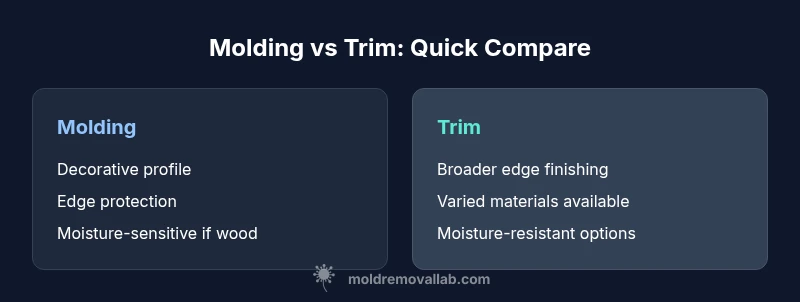
In interior finishes, molding is a specific type of trim with a decorative profile, used for ceilings, walls, and floors, while trim is the broader category of finishing strips that includes casing, baseboards, shoe molding, and more. Molding adds character, but trim handles gaps and edges. For mold risk, prioritize moisture control, proper sealing, and cleaning around both elements.
What is molding vs trim? Definitions and core differences
Molding and trim are terms homeowners encounter when finishing interior spaces, yet many people mix them up. At their core, both are types of finishing strips used where walls meet floors, ceilings, doors, or cabinets. The Mold Removal Lab team explains that molding is a specific subtype of trim designed with a decorative profile that adds character while also protecting edges from wear. Trim, by contrast, is the broader category that includes all edging and finishing strips—casing around doors, baseboards, transitions, shoe molding, quarter round, and more. Understanding this distinction matters for project planning, material choices, and even mold risk management, because different profiles and materials respond differently to humidity, temperature shifts, and cleaning approaches. In practice, many builders and designers use molding as the stylistic focal point in rooms with high ceilings or formal architecture, while trim serves practical edge work in low-traffic zones. For homeowners, knowing the difference helps with budgeting, choosing the right material, and coordinating with other finishes. In this guide, we’ll unpack definitions, typical scenarios, and practical steps to evaluate both options in the context of safe, healthy homes. What is molding vs trim? That question has more nuance than it might seem at first glance. According to Mold Removal Lab, moisture-related issues around trim and molding are common in damp spaces and warrant proactive attention.
Molding vs trim: key terms explained
Molding is a specific type of trim designed with decorative profiles that create shadows, character, and architectural rhythm. Trim is the umbrella term for all edge finishes, including door casings, baseboards, crown molding, casing around windows, shoe molding, chair rails, and picture rails. The distinction matters for project planning, as different profiles influence installation methods, fasteners, and substructure preparation. When you encounter terms like crown molding, casing, or baseboard, you are looking at trim patterns with varying degrees of ornamentation. A well-chosen molding or trim strategy can tie together a room’s style, while poor selection may highlight moisture or maintenance issues. This understanding helps homeowners communicate clearly with remodelers and ensures correct material choices for durability and mold resistance.
Visual and structural roles in interior design
Molding and trim do more than cover gaps; they define room scale, line, and proportion. Crown molding can visually lift a ceiling, while tall baseboards can anchor a room’s vertical rhythm. Casing around doors frames the doorway, guiding eye movement and contributing to perceived architectural quality. Beyond aesthetics, trim and molding protect vulnerable edges from everyday wear and water intrusion. In damp spaces, such as bathrooms or basements, choosing moisture-resistant profiles and materials is essential to prevent swelling, warping, or mold establishment along joints and edges. A strategic combination of molding and trim can unify a space, improve acoustics by creating clean edge lines, and simplify future maintenance when paired with sealants, paints, and mold-resistant finishes.
Common molding profiles and where they’re used
Top molding profiles include crown molding (ceiling embellishment), baseboards (wall-to-floor transitions), and casing (around doors and windows). Shoe molding and quarter round provide edge protection at floor-to-wall intersections where tiny gaps exist. Chair rails sit higher on walls to protect plaster from chairs and to create a visual break. Wainscoting or panel moldings add texture and depth to walls. Each profile serves a different purpose and requires specific installation nuances, such as nailing schedule, expansion gaps, and finishing coats. In damp rooms, prefer profiles with moisture resistance and tighter joints to minimize moisture trapping. The right combination of profiles can emphasize architectural lines, reflect light, and reduce the appearance of gaps or misalignment over time.
Common materials and costs (molding vs trim)
Materials for molding and trim range from traditional solid wood to modern composites. Wood offers warmth and detail but can warp with humidity; MDF provides smooth edges but may swell when exposed to water. Polyurethane and PVC options resist moisture better and are easier to install in wet spaces. Material choice influences not only appearance but maintenance needs and cost considerations. While hardwoods add prestige, moisture-prone areas benefit from moisture-resistant composites or vinyl-based profiles. Budget concerns are never far behind: material selection, profile complexity, and labor determine overall cost. When planning a project, factor in paint or stain finishing requirements, the need for primer, and whether you’ll seal joints with caulk or specialized sealants to deter moisture ingress.
How moisture and humidity affect molding and trim
Moisture attacks both aesthetics and structural integrity. Humidity can cause wood-based molding and trim to swell, warp, or separate at joints, creating gaps that trap moisture and encourage mold growth. Sealed surfaces and proper ventilation are critical for reducing moisture accumulation behind edge profiles. Water leaks from roofs, pipes, or plumbing fixtures near trim lines are common mold sources, as are poorly sealed gaps around windows and doors. Choosing moisture-resistant materials, applying mold-inhibiting paint finishes, and maintaining an even humidity level can significantly slow deterioration and mold development. Regular inspection after heavy rain, snowmelt, or HVAC use helps catch issues early. Mold protection is most effective when combined with responsible maintenance and prompt repair of water intrusion.
Mold risks specific to trim and molding installations
Trim and molding accessories are common mold hotspots when moisture bypasses protective barriers. Hidden cavities behind baseboards and crown molding can harbor damp conditions, especially in kitchens, bathrooms, and laundry rooms. Adhesives used to attach trim can trap moisture, creating micro-environments where mold can thrive if not properly ventilated. Poor installation practices—such as over-tightening fasteners, inadequate sealing, or neglecting expansion gaps—also increase risk by creating micro-fractures and moisture traps. Proactively selecting moisture-resistant materials, using appropriate sealants, and ensuring good airflow around these features lowers the risk substantially. If you notice odors, staining, or peeling finishes near molding or trim, investigate moisture sources promptly.
Inspection: how to assess trim for mold and moisture risk
Inspect trim and molding by looking for discoloration, warped edges, or soft spots along joints. A musty odor around baseboards or crown molding is a red flag. Check behind baseboards where possible for signs of moisture intrusion, such as staining or damp drywall. Use a moisture meter on wood trim in humid areas to gauge moisture content; persistent readings suggest a leak or condensation issue. Examine paint or finish peeling, cracking, or bubbling, which can indicate moisture movement. In bathrooms and kitchens, inspect caulking and sealants around edges; recaulking can greatly reduce moisture penetration. Document concerns with photos and plan to address underlying causes (leaky pipes, venting issues, or insulation gaps) before remediation.
Remediation steps and maintenance best practices (homeowner guide)
Address mold and moisture promptly. If mold is limited to surface areas of trim, clean with a mild detergent solution and dry thoroughly, then repaint with mold-resistant paint. For larger areas or structural concerns, consult a licensed professional. Replace heavily damaged trim and consider moisture-resistant materials in high-humidity rooms. Fix the moisture source—repair leaks, improve ventilation, and install or upgrade vapor barriers where needed. Regular maintenance includes resealing joints, repainting as needed, and ensuring consistent airflow from HVAC systems. By combining proper material choices with proactive maintenance, homeowners can reduce mold risk and extend the life of their molding and trim investments.
Comparison
| Feature | Molding | Trim |
|---|---|---|
| Definition/Scope | Decorative, profiled trim used to create architectural character | Broad category of finishing strips including baseboards, casing, and more |
| Typical Locations | Ceilings, walls, floors where profiles exist | Door/window casings, baseboards, transitions, edging |
| Materials | Wood, MDF, polyurethane, PVC, plaster options | Wood, MDF, PVC, polyurethane, metal options depending on use |
| Aesthetic Impact | High visual impact due to profiles and shadows | Subtle to moderate impact depending on profile and finish |
| Maintenance & Cleaning | More ornate profiles may require careful cleaning; moisture sealing important | Easier to clean with simpler profiles; sealing still important in moist spaces |
| Best For | Rooms with formal architecture or high ceilings; focus on design | Everyday edge finishing and practical gaps coverage |
| Installation Considerations | More complex installation; precise alignment and spacing needed | Quicker to install; flexible with gaps and contours |
Upsides
- Enhances architectural character and perceived value
- Broad selection of profiles and finishes
- Moisture-resistant options available with modern materials
- Can improve edge protection and conceal gaps
The Bad
- Higher upfront cost for elaborate profiles
- Requires precise installation and sealing in moist spaces
- Wood can warp in humidity without proper treatment
- Complex shapes may complicate future repairs
Molding adds design value, while trim offers versatility; choose based on room humidity, profile complexity, and budget.
Opt for moisture-resistant materials in damp areas, and select profiles that match your room’s architecture. For most homes, trim provides flexible edge finishing, while molding emphasizes style in spaces with higher ceilings or formal design.
FAQ
Are molding and trim the same thing?
Not exactly. Molding is a decorative subtype of trim with a defined profile, while trim is the broader category of edge finishing strips. Both serve different design and functional purposes and should be selected with room conditions in mind.
Molding is a decorative type of trim, while trim is the broader category of edge finishes. They’re related but not identical.
Can mold grow on molding or trim?
Yes, mold can grow on both if moisture becomes trapped behind the profiles. Regular inspection and moisture control are essential in damp spaces. Address any leaks or condensation issues promptly.
Mold can grow on both if moisture is present; fix leaks and improve ventilation to prevent it.
How should I clean mold from wood trim?
Start with a mild detergent solution and a soft brush. Rinse and dry completely, then consider applying a mold-resistant primer or paint. For large areas, consult a professional remediation service.
Use a gentle cleaner, dry thoroughly, and seal with mold-resistant paint; call a pro for big areas.
When should I replace moldy molding or trim?
Replace heavily mold-damaged trim after removing the moisture source and ensuring the surrounding structure is dry. Replacing with moisture-resistant materials is advisable in high-humidity zones.
If damage is extensive, replace with moisture-resistant materials after fixing the moisture source.
What materials work best in bathrooms?
Moisture-resistant options like PVC, vinyl, or polyurethane are preferred in bathrooms. Avoid solid wood in permanently damp areas unless adequately sealed and vented.
PVC or polyurethane is usually best for bathrooms; avoid untreated wood in wet zones.
How can I prevent mold growth on trim long-term?
Control humidity, fix leaks promptly, seal joints properly, and use mold-resistant paints or finishes. Regular inspections after storms or heavy humidity help catch issues early.
Keep humidity in check, seal joints, and inspect trims regularly to prevent mold.
The Essentials
- Identify whether you need decorative (molding) or broad edge finishing (trim) based on room design.
- Prioritize moisture control and material choice to prevent mold and warping.
- Choose profiles and materials suitable for humidity-prone spaces.
- Inspect and maintain edge finishes regularly to catch moisture early.
- Plan installation with proper sealing, ventilation, and expansion gaps.