Mold Smells Like Cigarette Smoke: A Practical Comparison of Remediation Options
Explore why mold smells like cigarette smoke, how to verify sources, and compare DIY remediation with professional services for safe, effective mold removal.


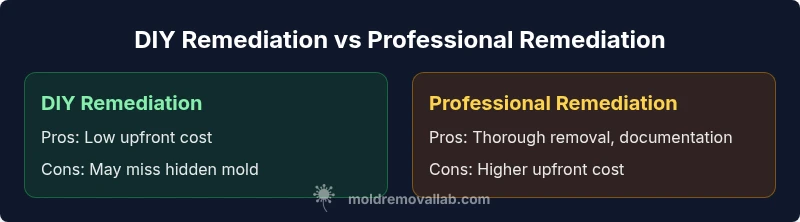
DIY remediation vs. professional remediation: When you detect odor that resembles cigarette smoke, start by confirming moisture sources and visible growth in accessible areas. This quick comparison helps homeowners decide whether a DIY approach is safe and effective or if professional remediation is warranted for hidden or extensive mold.
Why mold smells like cigarette smoke matters
Mold that produces a smell similar to cigarette smoke is not a harmless air nuisance; it often signals hidden moisture, microbial growth, and volatile organic compounds (VOCs) released by mold colonies. The odor itself can linger and become more noticeable in damp spaces like bathrooms, basements, laundry rooms, or areas with poor ventilation. In many homes, occupants mistake this scent for tobacco smoke drifting from another room, but the smell's source is usually the indoor environment where moisture is present. According to Mold Removal Lab, recognizing the distinction between smoke odor and mold-related scents is a critical first step in assessing risk and deciding on remediation. This is particularly important when odors persist after cleaning attempts or when they intensify during humid conditions. If you notice mold smells like cigarette smoke, start a careful investigation of moisture pathways, hidden growth, and ventilation gaps.
In practice, the odor characterization should drive your next actions: identify sources, document affected areas, and determine whether a DIY approach is appropriate or if you need to bring in professionals. Because odors can originate from multiple sources (old tobacco residuals, cleaning product residues, or a true mold colony), it’s essential to differentiate where the smell is strongest and whether it correlates with visible moisture or musty air. Mold Removal Lab notes that relying on scent alone isn’t enough for a safe, thorough remediation; you should combine odor clues with moisture checks, surface testing when warranted, and a structured remediation plan.
The focus on odor is not about sensationalism—it’s about safeguarding occupants from potential health risks. Some people are more sensitive to mold than others, especially children, the elderly, and those with asthma or allergies. When mold smells like cigarette smoke is present, it’s reasonable to take prompt, cautious steps. The Mold Removal Lab team recommends starting with simple moisture control measures and guided inspections before escalating to more intensive interventions.
The goal of this article is to provide an objective, actionable comparison of two common paths for odor-related mold problems: DIY remediation at home and professional remediation services. We’ll cover criteria to evaluate, typical workflows, costs, and when each option makes sense. Understanding these factors will help you fix the problem effectively and reduce the risk of recurrence.
altTextForHeroImgBonusEmailIfNeededToPopulate
Comparison
| Feature | DIY Remediation (Home) | Professional Remediation |
|---|---|---|
| Source identification and containment | Limited by homeowner access; may miss hidden growth | Comprehensive evaluation with moisture mapping and licensed containment |
| Specialized equipment and containment | Basic cleaners, PPE, and consumer-grade deodorizers | Industrial-grade containment, negative air pressure, moisture meters, and HEPA systems |
| Certifications and oversight | No formal remediation certification required for DIY | Most jobs documented with scope, WDO/contractor oversight, and warranties |
| Typical duration | Shorter for small, accessible areas | Longer for complex, multi-room or structure-wide issues |
| Cost range (qualitative) | Low upfront cost, variable depending on materials | Higher upfront cost but more comprehensive coverage |
Upsides
- Potentially lower upfront cost with DIY (for small, simple areas)
- Quicker action for minor, non-structural mold growth
- Gaining hands-on knowledge about moisture sources and home health
The Bad
- Risk of incomplete removal or missed hidden mold
- Exposure to mold and cleaning chemicals without proper PPE
- Professional warranties and documentation are often missing in DIY outcomes
- DIY may lead to longer-term costs if problems recur
Professional remediation is generally the safer, more reliable path for odor-driven mold problems with potential hidden growth.
If the odor coincides with persistent moisture, visible growth, or access-only areas, a professional evaluation is typically warranted. DIY can work for small, well-contained areas with proper safety measures, but hidden mold and structural concerns usually require professional remediation to ensure thorough removal and future protection.
FAQ
What does it mean if mold smells like cigarette smoke in my home?
The odor often indicates moisture-driven mold growth and VOCs produced by colonies. It can be mistaken for tobacco smoke, but the source is typically indoor dampness. A careful moisture assessment paired with selective testing helps determine the extent and whether DIY steps are enough or professional remediation is needed.
If you notice a cigarette-like odor indoors, start by checking for leaks, humidity, and mold in damp areas; it usually means there’s moisture driving growth that may require professional help.
Is it safe to try DIY cleaning if the odor is mild?
Mild odors from easily accessible, non-porous surfaces can be addressed with standard cleaning methods and protective gear. Avoid disturbing suspected growth on porous materials, and don’t DIY if you’re unsure about the extent or if anyone in the home has respiratory issues. When in doubt, consult a professional.
If the smell is mild and growth isn’t visible, you can start with careful cleaning and moisture control, but stop if you’re uncertain or the odor persists.
When should I hire a professional for odor-related mold issues?
Hire a professional when the odor is persistent, growth is hidden behind walls or insulation, there are ceiling or structural signs of moisture, or you’re unsure about containment and safety.
If the odor won’t go away after basic cleaning, or you suspect hidden mold, call in a professional for a thorough inspection and remediation.
Can mold testing confirm the source of a cigarette-like odor?
Testing can help identify mold species, moisture levels, and hidden growth, but odor alone isn’t a definitive indicator. Testing should be part of a broader assessment including moisture mapping and visual checks.
Tests can show if mold is present and where it’s concentrated, but you often need moisture checks to locate the source of the odor.
Will odors disappear after cleaning?
Odors may lessen after cleaning, but if moisture remains, the smell often returns. Effective remediation targets moisture sources, not just scent, to prevent recurrence.
Cleaning might remove the smell temporarily, but you should fix the moisture problem to stop it coming back.
What are common DIY methods for odor control?
Ventilation improvement, humidity control, surface cleaning with non-toxic cleaners, and odor absorbers can help. Avoid aggressive chemicals and procedures on unknown mold growth; never disturb moldy porous materials.
Try improving airflow and humidity, clean safe surfaces, and use odor absorbers; avoid aggressive treatments on unknown growth.
The Essentials
- Assess odor sources early and document moisture points
- DIY is feasible for small, accessible areas with clear risks
- Choose professionals for hidden or structural mold and when odor persists
- Expect higher upfront costs but better long-term outcomes with professional remediation
- Combine odor control with moisture management to prevent recurrence