Mold Removal Near Me: Practical Guide for Safe Remediation
A data-driven guide to choosing local mold remediation pros, understanding costs, timelines, and post-remediation verification for safer, durable results.


Finding effective mold removal near me starts with local licensed professionals who assess moisture, containment, and safety. Quick remediation may seem cheap, but incomplete removal leads to re-growth. According to Mold Removal Lab, the most reliable local services use moisture mapping, HEPA air cleaning, and post-remediation verification. Expect clear estimates, upfront inspection, and a written remediation plan before work begins.
Understanding what mold removal near me entails
When a homeowner searches for mold removal near me, the goal is to locate a local provider who can assess moisture sources, contain the affected area, and remove visible and hidden mold safely. The process hinges on recognizing that mold thrives where moisture persists. A competent contractor will begin with a moisture survey, confirm containment to prevent cross-contamination, and map out a remediation plan that details which materials will be removed and which can be saved. According to Mold Removal Lab, successful local remediation combines technical containment, controlled demolition of porous sources when necessary, and verification tests after work completes to ensure the area is safe for re-occupancy.
Credentials to look for in a local mold team
Not all contractors have the same qualifications. Look for licenses and insurance that cover mold remediation, a clearly defined scope of work, and certifications such as IICRC Mold Remediation Technician or equivalent. Ask for a written protocol that outlines containment methods, air filtration strategies, and waste disposal plans. A reputable team should also provide pre- and post-remediation photos, moisture readings, and a final report documenting clearance. This level of documentation helps homeowners verify that the work meets industry standards and local codes.
Distinguishing removal, remediation, and cleanup
Mold removal focuses on eliminating visible mold colonies, while remediation addresses the underlying moisture problems and includes cleaning, disposal of affected materials, and restoration. Cleanup is the finishing touch: sanitizing surfaces, HEPA vacuuming, and ensuring that odors and micro-contaminants are reduced. Understanding these distinctions helps homeowners avoid vague bids that promise “removal” without addressing mold behind walls or hidden moisture pockets. A thorough bid should specify scope, containment level, materials to be removed, and post-remediation testing.
A practical step-by-step approach from inspection to verification
- Inspection and moisture mapping to locate sources and assess extent. 2) Containment setup with barriers and negative air pressure. 3) Mold removal and disposal of affected materials following safe protocols. 4) Cleaning and air purification using HEPA filtration and targeted sanitizers. 5) Verification testing (air and surface sampling) to confirm clearance. 6) A detailed remediation report with post-test results and maintenance recommendations. This structured approach minimizes recontamination and supports durable results.
Common homeowner mistakes and how to avoid them
- Skipping the moisture source; mold returns if humidity isn’t controlled. - Underestimating the extent and sealing only the surface. - Rushing into cleanup without containment, which spreads spores. - Accepting verbal bids; insist on written scopes and a fixed price. - Waiting too long to verify results after work. Each misstep can undermine safety and durability.
DIY vs professional remediation: when to choose pro help
DIY cleanup can be tempting for small, non-porous areas, but it’s risky for larger or porous mold. Pro remediation uses containment, calibrated cleaning agents, and clearance testing that most DIY methods cannot replace. For any significant mold problem, professional intervention minimizes exposure risks, ensures proper disposal, and provides documentation for home insurance and inspections.
Post-remediation verification and documentation you should expect
A credible remediation project ends with post-remediation testing and a formal report. The report should summarize findings, show pre- and post-testing results, and confirm that moisture sources are controlled. Keep this documentation for future home maintenance, insurance claims, and potential resale. Consistent follow-up testing can catch moisture anomalies early and prevent recurrence.
Practical prep tips before remediation crews arrive
Clear access to affected areas, protect valuables with plastic sheeting, and remove valuable items from the work zone. Notify occupants about potential odors during cleanup and plan temporary relocation if needed. Ensure pets and children are kept away from work zones. A little upfront preparation helps the crew work efficiently and reduces the chance of cross-contamination.
Typical approaches to mold remediation cost and scope
| Strategy | Typical Cost Range | Pros | Cons |
|---|---|---|---|
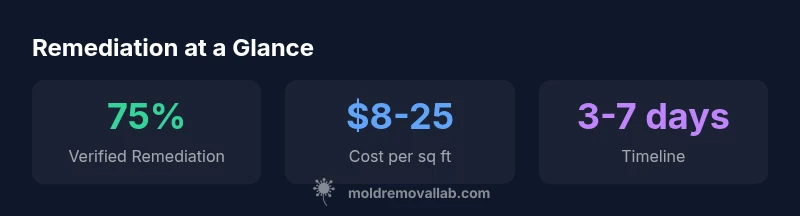
| Full removal and remediation | "$8-25 per sq ft" | Thorough cleanup and long-term safety | Higher cost; longer timelines |
| Containment + cleanup | "$3-10 per sq ft" | Faster, less invasive | May miss hidden moisture or behind-wall mold |
| DIY limited cleanup | "N/A" | Low upfront cost | Exposure risk; limited effectiveness |
FAQ
How do I find mold removal near me?
Start with licensed, insured contractors who provide a written scope, containment plan, and post-remediation verification. Check online reviews, request prior project photos, and confirm certifications. A local pro should also explain moisture sources and offer a clear timeline before work begins.
Look for licensed local pros with written scopes and clear timelines. Always ask about containment and post-remediation testing.
What licenses should a contractor have for mold remediation?
Requirements vary by state, but reputable mold remediators commonly hold general contractor licenses, mold remediation certifications, and insurance. Confirm that the team follows local codes and uses appropriate containment and disposal procedures.
Ensure they’re licensed, insured, and certified for mold remediation with a written plan.
Is DIY mold cleanup safe?
Small spills on non-porous surfaces may be manageable with proper PPE, but porous materials and large infestations require professional handling to prevent exposure and cross-contamination. Always prioritize safety and consider long-term health risks.
DIY can be risky; large mold problems should be left to pros for safety and effectiveness.
How long does remediation typically take?
Time varies with area size, complexity, and moisture sources. Simple cases may complete in a few days; larger jobs could take a week or more. A licensed pro should provide a realistic schedule in the proposal.
It depends on size and moisture; expect a few days to a week for typical homes.
What is post-remediation verification and why is it important?
Post-remediation verification confirms that mold levels and moisture have returned to acceptable levels. This usually involves air and surface sampling and a clearance report. It’s essential to prevent recurrence and satisfy safety standards.
Verification confirms the space is safe; don’t skip this step.
Should I replace materials after mold remediation?
Replacement depends on material porosity and extent of contamination. Non-porous surfaces may be cleaned and restored; porous materials like drywall or insulation often require removal and replacement to prevent regrowth.
Ask if affected materials must be removed to prevent future mold.
“A careful mold remediation plan balances thorough removal with moisture control to prevent recurrence; always demand written scope and post-remediation verification.”
The Essentials
- Start with a licensed pro near you
- Insist on a written remediation plan before work
- Avoid DIY for large mold problems
- Require post-remediation verification and documentation
- Invest in moisture control to prevent recurrence