Is Mold the Same as Moss? An In-Depth Comparison
Discover how mold differs from moss, how they grow, health implications, and practical steps to identify, test, and prevent moisture-related growth in homes.


Is mold the same as moss? According to Mold Removal Lab, no—mold is a fungus while moss is a non-vascular plant. This quick comparison clarifies definitions, growth conditions, health implications, and practical remediation to help homeowners decide when to test, clean, or prevent moisture problems.
What Are Mold and Moss?
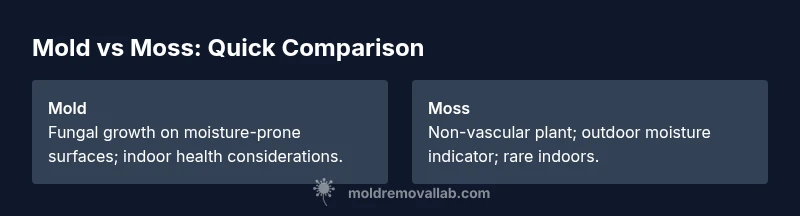
Mold and moss occupy different biological kingdoms. Mold is a fungus that reproduces via spores and thrives on moisture on organic surfaces. In homes, common mold species can grow on wood, drywall, fabrics, and insulation when humidity remains high. Moss, by contrast, is a non-vascular plant that forms dense mats in damp environments. It lacks true roots and uses hairlike structures called rhizoids to cling to surfaces. The question many homeowners ask is: is mold the same as moss? The short answer is no; they differ in biology, growth patterns, and remediation needs. Understanding these differences helps you target the problem, rather than chasing a symptom and wasting time on ineffective cleaners. According to Mold Removal Lab, misidentifying mold as moss can lead to underestimating moisture problems, delaying necessary remediation, and inviting recurrent growth. While both organisms favor damp conditions, their lifecycles diverge: mold spreads by airborne spores that can travel through the air, while moss propagates through spores and vegetative fragments that colonize new spots slowly. The practical takeaway is that the label you apply matters for safety and effectiveness: treat mold for what it is, address moisture, and avoid confusing it with moss, which typically signals outdoor conditions rather than indoor contamination.
How They Grow Differently
Mold and moss have distinct growth rhythms. Mold grows in colonies that can appear fuzzy, cottony, or powdery and range in color from white to black, green, or gray. Its rapid spread hinges on consistently high moisture, porous substrates, and limited airflow. Moss, conversely, grows slowly as dense green mats on persistent damp surfaces, primarily outdoors, and relies on moisture more than nutrients. Moss is less likely to invade dry indoor materials unless there is sustained water intrusion. In practical terms, if you notice a fast-spreading, powdery film on walls or wood in a moist room, you’re more likely looking at mold; a moss-like growth indoors is rare and usually indicates a different moisture dynamic outdoors or on shaded stone surfaces.
Visual Cues: How to Tell Them Apart
Clear visual cues can help you distinguish mold from moss without tools. Mold often has a fuzzy or powdery texture and can form irregular patches on walls, ceilings, or fabric. Colors vary widely—black, green, white, or gray—and edges may be uneven. Moss appears as a dense, leafy green or olive mat with a uniform texture, typically growing on organic surfaces outdoors such as rocks, soil, or mulch, or in very damp indoor spaces near leaks. If you see a bright green, leaf-like pattern on a damp surface, you may be looking at moss; if the patch is irregular, fuzzy, or spreading quickly, mold is more likely. Safety note: do not rely solely on color; both organisms indicate moisture, but mold raises health and remediation implications that moss does not.
Health Implications and Risks
Understanding the health implications of mold versus moss is essential for indoor environments. Mold exposure can trigger allergies, asthma symptoms, or irritation for sensitive individuals, particularly with chronic exposure or certain species that produce irritants. Moss, while not typically toxic to humans, signals persistent moisture and potential structural or surface issues that deserve attention to prevent deterioration. The distinction matters because it shapes the remediation path: mold requires moisture control, containment, and cleaning with mold-safe products; moss outdoors may require different moisture management and does not usually necessitate indoor remediation. According to Mold Removal Lab analysis, recognizing mold as a possible indoor contaminant is critical for reducing exposure and prioritizing proper moisture control.
When to Test and When to Clean
Testing for mold is warranted when you see visible growth, lingering musty odors, or signs of water intrusion. Quick DIY checks like moisture meters and surface swabs can help, but inconclusive results should be followed by professional testing. Moss does not typically require formal testing indoors unless it appears in unusual indoor damp areas and accompanies other moisture problems. The key decision is whether you need a remediation plan that reduces moisture (dehumidification, drying, fixing leaks) or simply removal of a benign outdoor moss patch. If mold is suspected indoors, treat it as a moisture problem first and use approved cleaners and containment techniques. Mold Removal Lab recommends documenting moisture sources, repairing leaks, and employing air filtration during cleanup to reduce airborne spores.
Moisture, Surfaces, and Substrates
Mold thrives on porous surfaces where organic material is present, especially in warm, humid environments. Water damage, high indoor humidity, and limited ventilation are prime conditions for mold growth. Moss prefers permanent dampness on outdoor surfaces but requires light and a steady moisture supply to persist. Substrates matter: mold will colonize drywall, wood, and fabric, whereas moss tends to colonize soil, rocks, or bark. In indoor settings, persistent dampness on wood studs or insulation is a strong mold signal. Managing humidity, improving airflow, and repairing leaks are essential steps that address the root cause rather than simply removing surface growth.
Home Scenarios: Common Confusions
In practical home life, people may confuse outdoor moss on a shaded walkway with indoor mold on a wall, especially after a moisture event. Another common mix-up is mistaking algae or lichen for moss or mold. The test is to consider location, texture, and growth pattern: indoor patches with fuzz and rapid spread point to mold; outdoor mats on soil, rocks, or wood are more likely moss. Throughout, remember that the question is not just about identity; it is about moisture management and remediation strategy. The Mold Removal Lab team emphasizes this distinction to avoid wasted effort and ensure safety during cleanup.
Identification Methods: Quick DIY and Professional Tests
DIY cues include observing texture, scent, and growth pattern, and using inexpensive moisture meters to map damp zones. For definitive results, professional testing can identify mold species and quantify spore loads. Do-it-yourself swab tests can indicate presence, but professional air and surface sampling are more reliable for a remediation plan. Moss is rarely tested indoors, but if outdoor moss encroaches indoors, you should seal entry points and fix humidity issues. If you’re unsure, a licensed remediator can assess moisture sources, containment needs, and the appropriate cleaning approach. The distinction between mold and moss is more than a label; it drives the remediation steps.
Remediation and Prevention: Practical Steps
Remediation for mold focuses on moisture control, removing contaminated materials if necessary, cleaning with mold-safe products, and ensuring proper ventilation. For moss, outdoor management—such as improving drainage, trimming overhanging vegetation, and reducing persistent shade—often suffices. Prevention hinges on moisture reduction: fix leaks promptly, use exhaust fans, run dehumidifiers, and maintain low indoor humidity. For indoor spaces where mold is present, consider temporary containment to prevent spore spread during cleanup. The key is to address both organism types according to their growth patterns and health implications, not by applying a single universal solution. The Mold Removal Lab team would stress moisture control as the cornerstone of prevention and remediation.
Comparison
| Feature | Mold | Moss |
|---|---|---|
| Classification | Fungus (microorganism) | Non-vascular plant |
| Growth Conditions | Requires moisture on organic surfaces; can occur indoors | Thrives in consistently damp outdoor environments; grows on soil, rocks, or tree bases |
| Appearance Cues | Fuzzy or powdery textures; colors include black, green, white, gray | Dense green or olive mats; leafy appearance |
| Indoor Health Impact | Can trigger allergic reactions; some species may produce irritants | Generally not harmful to humans; indicates moisture problems |
| Remediation Approach | Moisture control, surface cleaning with mold-safe products, possible deodorization | Outdoor moisture management; removal not typically required indoors |
| Typical Locations | Bathrooms, basements, kitchens, any persistent moisture area | Shaded outdoor surfaces, soils, rocks, logs |
Upsides
- Clarifies identification to avoid misclassification
- Encourages moisture management to prevent growth
- Helps decide between DIY cleaning and professional remediation
- Supports informed home maintenance decisions
The Bad
- Relying on visuals can still lead to misidentification
- Indoor moss is rare and may be mistaken for mold in damp indoor spaces
Mold and moss are distinct; address moisture and remediation paths separately
Distinguish mold from moss to guide proper remediation. Prioritize moisture control and use appropriate cleaning or professional services when needed. Moss usually signals outdoor moisture patterns, while indoor mold indicates a moisture problem requiring targeted intervention.
FAQ
Is indoor moss a mold risk?
Indoor moss is uncommon and usually indicates persistent moisture near exterior sources. It is not typically a health mold risk, but its presence should prompt moisture assessment to prevent potential mold growth nearby.
Indoor moss isn’t typically a mold risk, but it signals moisture that should be checked to prevent mold nearby.
Can I clean moss with household bleach?
Bleach is not necessary for outdoor moss and can harm surrounding plants. For outdoor moss, focus on moisture control and physical removal if needed. Indoor moss should still prompt moisture remediation rather than chemical cleaning.
Bleach isn’t usually needed for moss; address moisture and remove moss if it’s a nuisance indoors.
How can I tell mold from moss visually?
Look for texture and environment: mold is fuzzy or powdery and often indoors with humidity, while moss is leafy and typically outdoors in damp, shaded areas. Texture, growth rate, and location are key cues.
Mold looks fuzzy and can be on indoor surfaces; moss is leafy and outdoor-focused. Check texture and location.
Do I need a professional to distinguish them?
If the growth is indoors, or you’re unsure about the health risks or moisture sources, a professional assessment is wise. They can identify mold species, assess moisture, and outline remediation steps.
If unsure, get a professional to identify mold and assess moisture sources.
What should I do if I find mold in my home?
Contain the area, fix moisture sources, and begin mold remediation with appropriate cleaners or professional help. Ventilate, remove contaminated items if necessary, and seal off the space to prevent spread.
Contain the area, fix moisture, and start remediation. Ventilate and seek professional help if needed.
Are there conditions common to both mold and moss?
Both thrive in moisture, but mold requires organic substrates and indoor humidity, while moss needs persistent moisture outdoors. Identifying conditioning helps tailor prevention strategies for indoor spaces.
Both like moisture, but mold indoors needs humidity and surface material; moss is usually outdoor.
The Essentials
- Identify mold and moss accurately to guide remediation
- Prioritize moisture control to prevent both issues
- Use professional testing when indoor growth is suspected
- Differentiate indoor health risks and outdoor management needs
- Keep records of moisture sources and remediation steps