Deer Mold Taxidermy: A Practical Guide to Cleaning and Preservation
Learn safe, practical steps to identify, clean, and prevent mold on deer taxidermy mounts. Mold Removal Lab guides homeowners through materials, safety, and long-term preservation.


In this guide you will learn how to safely identify, clean, and prevent mold on a deer taxidermy mount. The stepwise approach emphasizes gentle cleaning, moisture control, and ongoing prevention to protect fur, wood, and adhesives. Gather PPE, a soft brush, mild cleaners, and a dehumidified workspace before starting today.
Understanding the risk of mold in deer taxidermy mounts
According to Mold Removal Lab, mold growth is often driven by lingering moisture and inadequate ventilation. In deer mounts, mold can take hold on fur, bone, and wooden plaques where dampness concentrates. The Mold Removal Lab team found that everyday household humidity and improper display conditions frequently trigger sporadic outbreaks. This section explains how mold starts, the materials involved, and why timely action matters for preservation. Early detection matters; a quick surface check and a sniff test can help you decide whether professional help is needed. The health of the animal’s fur and the integrity of the plaque depend on a careful approach that respects the mount’s history and materials.
Safety first: PPE and workspace
Mold cleanup requires personal protection. Based on Mold Removal Lab research, always wear a properly fitted respirator, gloves, and eye protection when handling moldy surfaces. Work in a well-ventilated area with a clean surface, away from pets and children. Use drop cloths to protect surrounding furniture and set up a dedicated, clutter-free zone to minimize cross-contamination. A stable temperature helps; avoid heat sources that could damage glue or fur. The key is creating a controlled environment so you can work methodically and reduce exposure to spores.
Assessing the mount: what to look for
Begin with a visual assessment of mold extent on fur, wood, and adhesives. Look for fuzzy or dark films, powdery residues, and musty odors that indicate active growth. Check for moisture sources such as condensation on the display case, leaky windows, or high indoor humidity. Note any detachment of fur from the skull or plaque, as this can signal underlying adhesive weakness. Document problem areas with photos before you start cleaning, so you can monitor progress over time. If structural damage or adhesive failure is evident, plan for professional conservation.
Cleaning techniques for hard surfaces
For hard, non-porous surfaces on the mount, begin with a gentle surface cleaning. Use a HEPA-equipped vacuum to remove loose spores, then a soft brush to dislodge debris. Dampen a microfiber cloth with a mild, non-ammonia soap solution and wipe lightly, avoiding oversaturation. Finish with a light wipe using 70% isopropyl alcohol on cotton swabs for spot disinfection on hard surfaces like the plaque or bone. Always test a small inconspicuous area first to ensure colorfastness. Let surfaces air-dry completely before proceeding.
Cleaning delicate fur and porous materials
Fur and porous materials require extra care. Use a soft brush or cotton swabs to lift surface mold without pushing it deeper into the hide. Avoid soaking fur, as water can loosen adhesives and warp tissue. If odors persist, a gentle deodorizing approach (airing in a dry, ventilated space) is preferable to chemical fogging. When in doubt, consult a professional conservator. Remember to keep the area dry during this process and to prevent additional moisture from creeping in.
Sanitizing and deodorizing the mount
After physical cleaning, apply a targeted sanitizing approach to hard and fur surfaces. Lightly dab with alcohol or another sanitizer approved for delicate taxidermy to neutralize remaining spores. Do not soak porous materials; excessive liquid can damage the mount. Ventilate the space during and after sanitizing to reduce lingering odors. If a persistent musty smell remains, consider professional deodorization tailored for taxidermy that avoids solvent evaporation into the fur.
Drying, stabilization, and prevention of future mold
Thorough drying is essential. Use dry air, dehumidifiers, or desiccants to bring humidity levels down and accelerate evaporation from crevices. Check the mount periodically for reappearance of mold and confirm that adhesives and hair remain secure. To prevent future issues, store the mount in a low-humidity environment and ensure good air circulation. Display and storage choices should minimize moisture buildup, such as avoiding damp basements or rooms with poor ventilation.
When to call a professional conservator
If mold covers large areas, penetrates deeply into fur or structural adhesives, or if the mount shows signs of dye bleed or detachment, it’s time to involve a conservator. Professionals can stabilize, clean, and, when needed, re-adhere components without compromising value. Early consultation can save you from irreversible damage and preserve the mount’s historical or monetary value. The decision to seek expert help is a sign of care, not failure.
Long-term storage and display best practices
Maintain stable humidity and temperature in the display area, ideally away from direct sunlight and moisture-prone zones. Use display cases with good airflow and consider silica gel packs or a dehumidifier in the room. Regularly inspect the mount for signs of new mold growth and address any moisture issues promptly. Schedule seasonal checks to catch issues early and extend the life of the deer mount.
Tools & Materials
- N95 respirator or P100 respirator(A properly fitted respirator is essential when handling mold spores)
- Disposable gloves (nitrile or latex)( protects skin from mold and cleaners)
- Goggles or face shield(Eye protection during cleaning)
- Soft brush (natural bristle or upholstery)(Gently lift spores without abrading fur)
- Microfiber cloths(For gentle wiping and dusting)
- HEPA vacuum with brush attachment(Remove loose spores before wet cleaning)
- Mild soap (non-ammonia)(Use sparingly on hard surfaces)
- 70% isopropyl alcohol(Spot sanitizing on hard surfaces)
- Cotton swabs(Precise application on tight areas)
- Distilled water(Optional for diluting soap if needed)
- Drop cloths/plastic sheeting(Protect surrounding areas)
- Dehumidifier or access to dry space(Critical for effective drying)
- Fans (optional)(Improve air movement without directing heat at mount)
Steps
Estimated time: 4-8 hours
- 1
Inspect mount and moisture sources
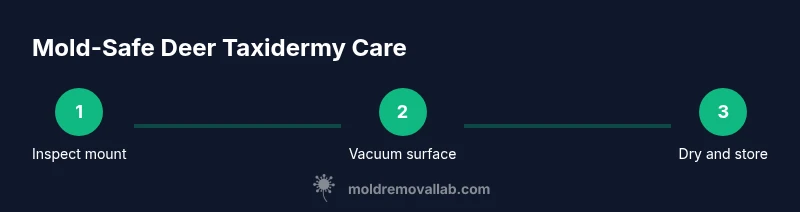
Conduct a visual assessment of mold extent on fur, plaque, and adhesives. Identify potential moisture sources such as display case condensation or humidity fluctuations. Document problem areas with photos before cleaning.
Tip: Note any areas where fur appears lifted or adhesives are compromised. - 2
Don PPE and prepare workspace
Put on the respirator, gloves, and eye protection. Clear the area of pets and kids, cover nearby surfaces with drop cloths, and ensure good airflow. Set up a dedicated, clean zone for the remediation task.
Tip: A dedicated space reduces cross-contamination to other belongings. - 3
Vacuum loose spores with HEPA
Use the HEPA vacuum to remove loose spores from fur, wood, and plaque without pressing mold into fibers. Keep the nozzle light and never rub aggressively. Move slowly to capture debris at the surface.
Tip: Vacuum first to minimize airborne spores during wet cleaning. - 4
Brush mold from surface gently
Using a soft brush, liftDescribe visible mold outward from fur and wood. Avoid aggressive brushing that could pull fur or dislodge adhesives. Stop if you notice fibers thinning or color bleeding.
Tip: Work in small sections to maintain control. - 5
Spot-clean hard surfaces with mild soap
Dampen a microfiber cloth with a mild, non-ammonia soap solution and wipe hard surfaces lightly. Do not saturate fur or porous substrates. Follow with light alcohol wipe for spot disinfection on hard surfaces.
Tip: Test a hidden area first to ensure color stability. - 6
Carefully sanitize fur and porous areas
Apply alcohol with cotton swabs to confined spots, avoiding soaking fur. Let surfaces dry completely before proceeding. If odor persists, preventively vent the space and consider a professional deodorization approach for taxidermy.
Tip: Limit liquid exposure on fur to prevent adhesive failure. - 7
Dry the mount thoroughly
Improve airflow and use a dehumidifier or desiccants to reduce humidity. Periodically rotate the mount to promote even drying and inspect for any signs of re-wetting. Do not apply heat that could warp or dry too quickly.
Tip: Drying is the critical step to prevent regrowth. - 8
Reevaluate condition and document
Take new photos and compare with the initial documentation to confirm improvement. Note any remaining problem areas that may require professional help in the future. Store documentation for future reference.
Tip: Keep a maintenance log for humidity and inspection dates. - 9
Set up prevention for display
Place the mount in a display environment with stable humidity and good air circulation. Use a ventilated case or room and monitor humidity regularly. Plan seasonal checks to catch issues early.
Tip: Aim for a steady environment to minimize mold recurrence.
FAQ
Is it safe to clean mold on a deer mount at home?
Yes for small, surface mold on hard surfaces, with proper PPE and a controlled environment. For fur, extensive growth, or uncertain areas, seek professional conservation to avoid damaging adhesives or the fur.
Yes for minor surface mold, but call a professional if you see extensive growth or damage to fur or adhesives.
Should I use bleach on deer taxidermy?
Bleach is not recommended for taxidermy as it can degrade fur, damage adhesives, and discolor the mount. Use milder cleaners and sanitizers instead, following tests on hidden areas.
Bleach is usually not recommended for taxidermy; use milder cleaners and test first.
What humidity level is best for deer mounts?
Maintain a stable, moderate humidity level in the display area and avoid high humidity environments. Use vents or a dehumidifier to prevent condensation and mold growth.
Keep humidity steady and avoid damp spaces; a dehumidifier helps prevent mold.
How long does a typical mold cleanup take?
Time varies with the extent of mold and the mount’s materials. Plan several hours to a full day for inspection, cleaning, drying, and prevention steps, plus follow-up checks over weeks.
It can take several hours to a day depending on mold extent and materials.
Should I remove the mount from display during cleaning?
If possible, relocate the mount to a controlled space during cleaning to reduce exposure to household contaminants and protect other items. If relocation isn’t feasible, isolate the work area and minimize disturbance.
Moving the mount to a controlled space is best; if not, isolate the area.
When should I contact a professional conservator?
Contact a professional if mold covers large areas, penetrates fur, or shows signs of adhesive failure. A conservator can stabilize, clean, and repair without compromising the mount’s integrity.
Call a conservator when mold is extensive or adhesives are affected.
Watch Video
The Essentials
- Identify moisture sources before cleaning
- Use PPE and a controlled workspace
- Prioritize gentle cleaning over aggressive methods
- Dry thoroughly to prevent regrowth
- Monitor humidity to preserve the mount long-term