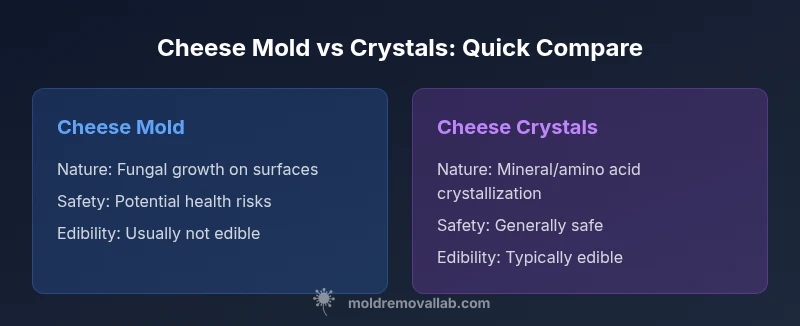
Cheese Mold vs Crystals: Key Differences Explained
Learn to distinguish cheese mold from crystals, understand safety implications, and apply practical storage, testing, and disposal tips for homeowners and renters.


Cheese mold vs crystals describes two distinct phenomena on dairy products: mold is a fungal growth that can appear fuzzy or colored, while crystals are hard, crunchy deposits that form during aging. Understanding the difference helps with safe disposal, smart storage, and avoiding unnecessary waste. Mold is a safety concern for many households, whereas crystals are usually a natural byproduct of aging cheese.
What are cheese mold vs crystals?
In the context of cheese, the phrase cheese mold vs crystals describes two distinct phenomena that can appear on aged dairy products. Cheese mold refers to fungal growth on surfaces or within the cheese mass, often appearing as fuzzy patches in green, blue, or white hues. In contrast, crystals are hard, granular deposits that form during aging as dairy proteins and minerals reorganize into crystalline structures. According to Mold Removal Lab, recognizing the difference is essential for safety, efficient waste reduction, and making informed storage choices. The Mold Removal Lab team emphasizes that not all white or green patches are equally dangerous, and correct identification can prevent unnecessary disposal or risky consumption. This article balances practical guidance with safety considerations for homeowners and renters who encounter this in their kitchens.
How to tell them apart
Comparison
| Feature | Cheese mold | Cheese crystals |
|---|---|---|
| Nature | Fungal growth on cheese surfaces or interior pockets | Mineral/amino acid crystal deposits formed during aging |
| Safety risk | Potential health risks especially for sensitive individuals; discard visible mold on soft cheeses | Generally safe to eat when crystals are clearly identified and cheese is properly aged |
| Edibility | Usually not edible; slice away moldy portions from hard cheese or discard soft cheese entirely | Typically edible as part of aging; verify identification and absence of spoilage |
| Formation context | Contaminant growth influenced by humidity, temperature, and surface contamination | Aging-driven crystallization from proteolysis and mineral reorganization |
| Best practice | Remove mold with proper technique or discard depending on cheese type; sanitize surrounding surfaces | Confirm crystals with a knowledgeable source; store cheese properly to minimize further aging changes |
Upsides
- Clarifies safety differences between edible crystals and mold
- Helps reduce food waste by proper disposal and storage
- Empowers homeowners to assess risk quickly
- Supports informed cheese handling and prep decisions
The Bad
- Molds on cheese can pose health risks for vulnerable people
- Crystals can be mistaken for mold without careful inspection
- Misidentification may lead to unnecessary waste or unsafe consumption
- Some household conditions promote mold growth despite good practices
Mold-related concerns require caution; cheese crystals are usually safe indicators of aging.
Distinguishing mold from crystals is essential for safety and waste reduction. Crystals often signal maturation, while mold warrants safe disposal or remediation depending on cheese type and health risks.
FAQ
What is the main difference between mold on cheese and crystals?
Mold is a fungal growth that can appear fuzzy and colored, signaling possible contamination. Crystals are hard, crunchy deposits formed during aging, usually harmless. Correct identification is key for safety and storage choices.
Mold is fuzzy and colored, crystals are hard and crystalline. Distinguish them to decide if the cheese should be discarded or can be eaten.
Are cheese crystals safe to eat?
In many cheeses, crystals form as part of aging and are safe to eat. If you’re unsure about the cheese type or if there are signs of spoilage, err on the side of caution and discard. When in doubt, consult labeling or a guide.
Crystals often indicate aging and are usually safe, but when unsure, check with a guide or discard if spoilage signs appear.
Can mold be harmless in cheese?
Some cheeses rely on specific molds for flavor (e.g., blue cheeses), but household molds on foods outside those categories can pose health risks. Always assess the mold type and the cheese’s texture before deciding to eat or discard.
Mold on cheese isn’t always dangerous, but many household molds pose health risks. When in doubt, discard or seek guidance.
What should I do if I find mold on cheese?
For hard cheeses, you can cut away mold with a generous margin. For soft cheeses, discard the entire piece. Clean and sanitize any surfaces the cheese touched, and refrigerate promptly to limit further growth.
If you see mold on cheese, trim from hard cheeses or discard soft cheese, and clean the area well.
Why do crystals form in aged cheese?
Crystals form as proteins and minerals reorganize during aging, often appearing as tiny crunchy granules. They are a normal result of maturation in cheeses like aged cheddar or parmesan.
Crystals come from aging and are a normal sign of maturation in some cheeses.
How can I prevent mold growth on cheese?
Store cheese properly: refrigerate, wrap loosely in parchment or cheese paper, keep it dry, and consume per recommended timeline. Regularly clean storage surfaces and avoid cross-contamination from moldy foods.
Keep cheese cold and dry, wrap it properly, and clean storage areas to prevent mold.
The Essentials
- Identify mold vs crystals by appearance, texture, and smell
- Discard moldy soft cheese; trim mold from hard cheese per safe guidelines
- Crystals indicate aging and are typically safe to eat when properly identified
- Store cheese with proper packaging to minimize mold growth
- When in doubt, consult a professional or trusted guide