Cheddar Cheese Mold: Safe Handling and Remediation Guide
Learn how to safely identify, handle, and remediate mold on cheddar cheese with practical steps from Mold Removal Lab. This guide covers when to discard, how to cut away mold on hard cheese, and storage tips to prevent recurrence.


You can safely handle mold on cheddar cheese by discarding visibly moldy portions or cutting away at least 1 inch of surrounding cheese if the cheese is hard, then refrigerate promptly. This guide from Mold Removal Lab explains when to discard, how to cut away mold, and how to prevent recurrence.
What is cheddar mold?
Cheddar cheese mold refers to fungal growth that can develop on the surface or within the rind of cheddar. While the idea of mold on food might be alarming, hard cheeses like cheddar are more forgiving than soft cheeses. The key is to identify whether the mold is limited to the surface or has penetrated the interior. In many cases, mold that appears on the exterior of a hard cheese can be managed safely by removing the affected portion and rechecking the texture and aroma. The Mold Removal Lab team notes that mold thrives when moisture and warmer temperatures align, especially in pantry-like or poorly refrigerated areas. Proper handling is essential to prevent spores from spreading to other foods in your fridge.
Health considerations and safety
Exposure to mold can trigger allergic reactions or respiratory symptoms in sensitive individuals. For most healthy adults, chewing or ingesting a small amount of molded cheddar that has been properly handled is unlikely to cause immediate harm, but it is not recommended. Always prioritize surface and utensil hygiene to prevent cross-contamination with other foods. If you notice a strong musty odor, slimy texture, or mold growth that has penetrated the interior, discard the cheese. Mold spores can spread through contact and air, so cleaning adjacent surfaces is part of responsible remediation. According to Mold Removal Lab, mold growth in the kitchen often starts from moisture buildup around dairy products and needs prompt action to minimize health risks.
When to discard vs. cut away mold on cheddar cheese
For hard cheeses like cheddar, you can usually cut away mold if it is on the surface and the rest of the cheese is firm and smells normal. Cut away at least 1 inch (2.5 cm) around and below the mold, keeping the cheese solid and intact. If the mold has penetrated into the interior, the proper safety choice is to discard the entire block. Soft cheeses or cheeses with moldy interiors require discarding the whole product. Always inspect for color changes, unusual textures, or foul odors before deciding. Mold Removal Lab emphasizes that safety comes first, and a cautious approach protects your household from potential exposures.
Step-by-step: safe removal protocol for cheddar mold
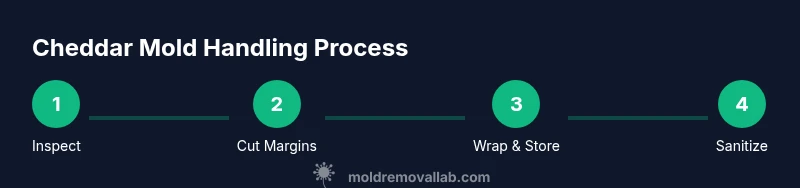
- Inspect the cheese visually and smell it. If the mold is only on the surface and the interior looks normal, proceed. If you detect off odors or the mold penetrates deeply, discard.
- Prepare your workspace and protective gear. Use clean gloves, a sharp knife, a separate cutting board, and a clean cloth. Tie back hair and work in a well-ventilated area to minimize inhaling spores.
- Cut away mold properly. Slice off the moldy area with a clean blade, removing at least 1 inch around and below the mold margin. Avoid chiseling into the mold itself to prevent spreading spores.
- Package and store. Rewrap the remaining cheddar tightly in fresh wrap or a sealed bag, and return it to the refrigerator promptly.
- Clean and sanitize. Wash the knife, cutting board, and any surfaces with hot, soapy water, then sanitize with a food-safe cleaner. Dry thoroughly before reuse.
- Monitor for recurrence. Check daily for new mold growth and discard if you see signs of reappearance.
Cleaning surfaces and preventing cross-contamination
Always isolate the moldy section from other foods during handling. Use separate utensils and perform a thorough cleanup of the prep area to prevent mold spores from spreading. After completing remediation, reseal all exposed containers and ensure your fridge is at a stable, cool temperature. The Mold Removal Lab team recommends practicing consistent cleaning routines and open airflow management to reduce future mold risks in kitchens.
Quick reference: the 1-inch rule and disposal basics
- Hard cheeses (like cheddar) can have mold cut away if the interior is unaffected, with a 1-inch safety margin.
- If you’re unsure about interior penetration or smell, discard the cheese for safety.
- Always wash hands and sanitize surfaces after handling moldy foods to avoid cross-contamination.
The Mold Removal Lab approach to mold in dairy
Mold on dairy is common in climates with high humidity and inadequate refrigeration. Our team emphasizes cautious, evidence-based steps: isolate the mold, cut away if safe, sanitize, and monitor. When in doubt, err on the side of safety and discard. This approach limits exposure, protects other foods, and reduces waste while maintaining kitchen hygiene.
Tools & Materials
- Cheese knife with clean blade(Dedicated knife for entire batch; avoid cross-contact with other foods)
- Cutting board(Non-porous, easy to sanitize surface)
- Plastic wrap or parchment paper(Wrap the remainder tightly in clean material to minimize moisture exposure)
- Resealable plastic bag(Store the remaining cheddar in a sealed container or bag in the fridge)
- Paper towels(For drying surfaces and wiping up any moisture)
- Food-safe sanitizer or mild soap(Use on surfaces after handling moldy cheese; avoid harsh chemicals near food)
Steps
Estimated time: 15-25 minutes
- 1
Inspect for mold and interior signs
Begin with a visual check of the exterior and a quick sniff. If the mold is only on the surface and the interior is firm with no off odors, you can proceed with safe removal. If in doubt, discard.
Tip: Do not attempt to taste-test moldy areas; rely on appearance and smell to decide. - 2
Prepare your workspace
Clear the area, lay down paper towels, and gather your dedicated knife and board. Put on gloves to minimize contact with mold spores and ensure you won’t contaminate other foods.
Tip: Keep the work area well-ventilated to reduce indoor mold spore concentration. - 3
Cut away the mold
Using a clean knife, cut away at least 1 inch around and below the mold. Do not cut directly into the mold itself. Preserve as much good cheese as possible.
Tip: Use a separate knife if you’re cutting multiple blocks to avoid cross-contamination. - 4
Wrap and refrigerate
Wrap the good portion tightly in fresh wrap or place in a sealed bag before returning to the fridge. Put the moldy portion in a sealed bag for disposal.
Tip: Label the container if you keep multiple blocks of cheese to track freshness. - 5
Clean up thoroughly
Wash the knife, board, and work surfaces with hot, soapy water, then sanitize. Dry completely before next use.
Tip: Sanitizing reduces residual spores and helps prevent secondary mold growth. - 6
Monitor and decide on reuse
Check the remaining cheese daily for any new signs of mold. If secondary mold appears or texture changes, discard the block.
Tip: When in doubt, it’s safer to discard than risk foodborne illness.
FAQ
Is it safe to eat cheddar cheese with visible mold?
If the mold is only on the surface of a hard cheddar and the interior appears firm with no off odor, you can cut away the mold with a generous margin. If there is any interior penetration or odd smell, discard the cheese.
If you see mold on hard cheddar and the inside looks and smells normal, you can cut away the mold with a generous margin. If in doubt, discard.
Can I salvage moldy cheddar by cutting it into smaller pieces?
Cutting away moldy portions is possible on hard cheddar, but only if the mold is surface-level and the interior is unaffected. If mold has spread inside the block, salvage is not recommended.
You can salvage if the mold is only on the surface and the rest stays solid, but if the mold penetrates inside, discard.
Should I use bleach or strong cleaners on moldy cheese surfaces?
No. Do not use household bleach on cheese or food-contact surfaces. Use hot, soapy water and a food-safe sanitizer to clean utensils and surfaces after handling moldy cheese.
Avoid bleach on food; clean with soap and water and sanitize afterward.
What if the mold returns after I’ve cut away the mold?
If new mold appears after remediation, discard the cheese and re-evaluate the storage conditions to prevent recurrence. Mold can reseed quickly in moist environments.
If it comes back, it’s safer to discard and check fridge temperature and moisture.
Can moldy cheddar be used for cooking or other recipes?
It is not recommended to use moldy cheddar for cooking, as mold can produce toxins that survive some cooking processes. Safer to discard.
Better to discard moldy cheddar rather than risk toxins in dishes.
How can I prevent cheddar mold in the future?
Store cheddar in a well-sealed container or wrap tightly, maintain clean fridge temperatures, and use cheese within its recommended freshness window. Practice good kitchen hygiene.
Keep cheddar sealed and clean your fridge to avoid mold growth.
Watch Video
The Essentials
- Cut away mold on hard cheddar with a 1-inch margin if interior is unaffected
- Discard cheese when mold penetrates the interior or odor is strong
- Always sanitize tools and surfaces after handling moldy cheese
- Store remaining cheese tightly wrapped in a cool fridge to prevent recurrence
- When in doubt, prioritize safety and discard rather than risk exposure