Will Renters Insurance Cover Mold? A Practical Guide
Discover whether renters insurance covers mold, common exclusions, and how to verify your policy. Learn about endorsements, filing steps, and practical prevention tips from Mold Removal Lab.


Renters insurance can cover mold damage, but only in certain situations. According to Mold Removal Lab, mold resulting from a covered peril (like a burst pipe or an appliance leak) may be covered for damaged personal belongings and, in some cases, temporary housing. Mold caused by long-term moisture, leaks due to negligence, or lack of maintenance is usually excluded unless you add an endorsement.
Understanding will renters insurance cover mold
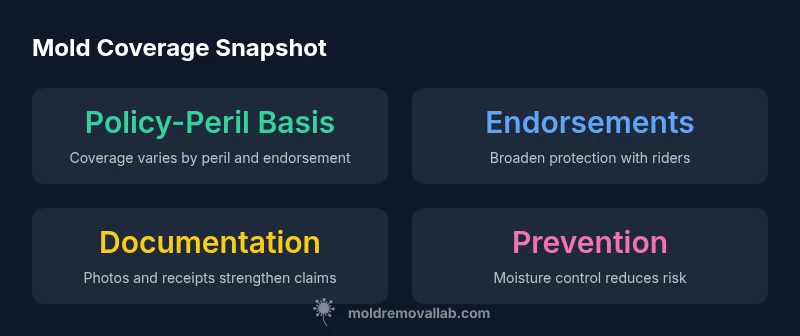
Mold is not automatically a covered risk in every renters policy. Coverage hinges on the policy’s defined perils and whether any endorsements apply. According to Mold Removal Lab, mold that results from a covered peril—such as a burst pipe, refrigerator leak, or appliance malfunction—may trigger coverage for damaged personal belongings and, in some cases, temporary housing costs if you must relocate while the issue is addressed. Conversely, mold that grows from ongoing moisture, leaks due to negligence, or poor maintenance is typically excluded unless you have a specific endorsement. To determine your protection, start with your declarations page and the policy’s definitions of perils, pollutants, and mold. If the policy is unclear, contact your insurer for written confirmation of whether mold is a covered hazard and under what limits. Proactive homeowners and renters can reduce risk by addressing moisture promptly and maintaining proper ventilation to minimize mold growth.
Tips from Mold Removal Lab: review the wording on “mold” and “water damage” sections, and note any required conditions before filing a claim.
What is typically covered (and what isn’t)
When mold damage is covered, it often falls into two buckets: damage to belongings inside the rental unit and remediation costs tied to a covered peril. Many policies reimburse for damaged personal property and may pay a portion of mold remediation if the underlying cause is a listed peril (like a burst pipe), not normal or long-term moisture. Some plans also offer Additional Living Expenses (ALE) if the unit becomes uninhabitable due to a covered loss. However, mold caused by neglect or long-term moisture without a qualifying peril is usually excluded. Endorsements can broaden coverage for mold removal and remediation, but they vary by insurer and state. Always verify what triggers coverage, the deductible, and any sublimits that apply to mold-related claims.
Note: The prevalence of mold exclusions means you should read the policy carefully and ask about gap coverage for mold, particularly if your rental has a history of leaks or humidity issues.
How to check your policy
Begin by locating the declarations page and your policy’s mold, water damage, and perils definitions. Look for terms like “mold,” “mold remediation,” and “water damage” to understand what triggers coverage. If you have a separate endorsement or rider, review its scope and limits. Call your insurer to confirm whether mold is excluded or included, and whether a sense of maintenance or neglect would negate coverage. Gather evidence such as inspection reports, photos of prior leaks, and receipts for remedial work to support a potential claim. Finally, request a written confirmation of mold coverage and its limits to avoid surprises at claim time.
Endorsements and add-ons
An endorsement or rider can significantly change how mold is covered. Common options include a mold rider, broader water damage protection, and per-item coverage for specific belongings. Endorsements may remove certain exclusions, raise sublimits, or extend coverage to maintenance-related mold under defined conditions. If you live in a high-humidity area, have a history of leaks, or rent out a property with previous mold issues, consider discussing endorsements with your insurer. Compare costs, coverage limits, and claim process requirements before purchasing.
How to file a mold-related claim
If you discover mold and believe you have coverage, document the issue thoroughly with timestamps, photos, and professional assessments. Notify your property manager or landlord if required, and file a claim with your insurer promptly. Separate categories of loss: personal belongings vs. structure and remediation costs. Provide repair estimates, proof of repairs, and any relevant inspection reports. Expect deductibles to apply and be prepared to demonstrate that the mold arose from a covered peril. If you’re unsure, ask your adjuster for a pre-claim determination to understand eligibility before extensive remediation work begins.
Prevention and documentation
Preventing mold starts with moisture control: fix leaks promptly, use dehumidifiers in damp areas, and ensure good ventilation in bathrooms, kitchens, and basements. Regularly inspect ceilings, pipes, and window frames for condensation and moisture. Keep a log of humidity levels and home repairs, along with photos of maintenance work. If mold is suspected, address it early with a qualified remediator and keep receipts. Documentation improves claim handling and can help support a favorable outcome if mold-related costs are disputed.
Sample policy scenarios showing where mold coverage may apply
| Scenario | What is Covered | Notes |
|---|---|---|
| Pipe burst mold damage | Covers damaged belongings and remediation if the peril is covered | Policy varies by insurer; check water damage and mold endorsements |
| Chronic moisture growth | Typically excluded unless linked to a covered peril or endorsement | Maintenance-related mold is commonly excluded |
| Unit uninhabitable | Temporary housing cost may be covered under Additional Living Expenses | Subject to policy limits and deductibles |
| Mold remediation costs via endorsement | Broadened coverage may apply; depends on policy language | Endorsements are not universal; confirm availability |
FAQ
Will renters insurance cover mold if there is a burst pipe?
If the burst pipe is a covered peril under your policy, mold damage caused by this event may be covered for damaged belongings and remediation costs. Documentation and proof of the peril are important for a successful claim.
Yes, if the mold results from a covered pipe burst and you have coverage for that peril.
Does ongoing water damage from leaks count as a covered peril?
Ongoing leaks that lead to mold are often excluded unless the policy includes a specific endorsement or the leak is a one-time covered event. Check definitions and endorsements in your policy.
It depends on your policy; many plans exclude ongoing leaks unless an endorsement exists.
What is a mold endorsement and how do I get one?
A mold endorsement adds broader protection for mold-related remediation and sometimes covers maintenance-related growth. Contact your insurer to add the rider, review limits, and confirm effective dates.
A mold endorsement broadens coverage and is usually added by talking to your insurer.
How do I document mold damage for a claim?
Take dated photos, log humidity levels, preserve damaged items, obtain professional assessments, and keep repair receipts. Clear documentation speeds up claims and reduces disputes.
Document mold with photos, reports, and receipts before filing.
Does mold coverage apply to belongings only or also to the unit?
Most renters policies cover damaged belongings. Unit structure typically falls under landlord insurance, unless a specific perils endorsement covers remediation costs or if your policy includes dwelling-related protections.
Coverage usually focuses on your stuff, not the building itself.
Is there a difference in mold coverage for renters in apartments vs houses?
Coverage generally follows the policy terms rather than the dwelling type. Endorsements and state-specific rules can vary, so verify how mold is treated for your rental type.
Coverage differences depend on policy language, not just apartment versus house.
“Policyholders should treat mold coverage as peril-based, not a blanket endorsement. The Mold Removal Lab team recommends verifying perils and adding endorsements when mold risk is present.”
The Essentials
- Review perils and endorsements in your policy
- Document mold promptly with photos and notes
- Ask about Additional Living Expenses if you must relocate
- Consider a mold endorsement if risk is high