Mold Removal Cost in Attics: What Homeowners Should Budget for 2026
Plan attic mold remediation with practical cost ranges, drivers, and budgeting tips. Learn how extent, access, and containment influence price, plus insurance guidance from Mold Removal Lab.


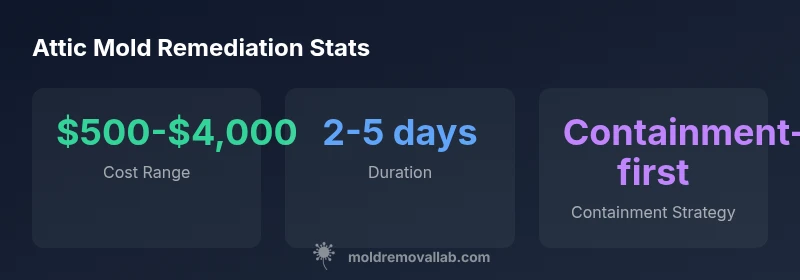
Attic mold removal typically costs between $500 and $4,000, with most projects landing around $1,500–$3,000. Price hinges on mold extent, attic accessibility, containment needs, insulation removal, and debris disposal. According to Mold Removal Lab, getting a professional assessment first helps define scope, prevents under- or over-spending, and protects indoor air quality.
Understanding Why Attic Mold Remediation Costs Vary
Attic mold remediation costs are rarely a single figure because projects differ widely in scope and complexity. According to Mold Removal Lab, the most influential variables include the size of affected area, the extent of growth, moisture sources, and accessibility of the attic. A small, contained patch behind soffits may require minimal containment and disposal, while widespread growth behind insulation, in joist cavities, or within ductwork demands more extensive containment, air scrubbing, and protective gear for workers. Climate and season can also shift pricing: in humid months, equipment rental and containment materials may be in higher demand, subtly lifting costs. When estimating, homeowners should factor in inspection costs, moisture source remediation, removal of affected insulation, and any necessary carpentry for damaged structure. The total bill also rises if building permits are required or if the attic requires scaffolding, roof access modification, or specialized equipment like negative air machines and HEPA vacuums. In many cases, a staged approach helps control expenses: address the moisture problem first, then test for mold in stages, and finally perform targeted remediation rather than a broad, open-ended cleanup. This strategy reduces waste and ensures that you’re paying for the work that truly protects indoor air quality.
The Main Cost Drivers in Attic Mold Projects
Several key drivers determine final attic mold remediation costs. First, the extent of contamination matters: a small, easily accessible area may require minimal tools and containment, while large, hidden growth behind insulation or within crawlspaces triggers more labor, materials, and time. Accessibility is another major factor: tight attics with low headroom, awkward angles, or difficult entry points complicate removal and increase labor hours. The materials affected—such as insulation, vapour barriers, drywall, or wood framing—also drive cost, especially when insulation must be removed and replaced. Containment and air quality measures add to the bill: negative-pressure setups, plastic sheeting, HEPA filtration, and frequent air testing raise both materials and labor costs. Finally, disposal, permits, and potential structural repairs contribute to the total. In many cases, a layered approach—moisture control first, then selective mold removal, followed by targeted insulation replacement—optimizes spend while safeguarding IAQ (indoor air quality).
How to Estimate Your Attic Mold Remediation Budget
Estimating an attic mold bill begins with a professional assessment to determine the scope. Request a written, itemized scope that breaks out inspection, containment, removal, disposal, insulation replacement, and any necessary carpentry. Ask for a three-tier range (low, mid, high) to understand potential swings and to build a contingency fund of 10–20% for unforeseen issues. Consider moisture-control work such as fixing leaks, improving attic ventilation, and addressing roof penetrations, as these can dramatically affect price and long-term outcomes. Collect multiple quotes from licensed mold remediation contractors, and compare each scope against the moisture source remediation plan. Finally, factor in potential insurance coverage and whether a rider is needed for structural repairs or insulation replacement. A careful, documented budget helps prevent sticker shock and ensures you’re addressing the root causes of moisture in the attic.
What to Expect During the Remediation Process
The remediation process typically unfolds in stages designed to protect occupants and limit cross-contamination. After a site assessment, technicians erect containment barriers to isolate the attic work zone. They perform mold removal, which often includes removing contaminated insulation and possibly damaged drywall or wood framing, followed by thorough cleaning with HEPA filtration. Debris is safely bagged and disposed of according to local regulations. Persistent moisture sources are addressed concurrently to prevent recurrence. Post-remediation testing may confirm IAQ targets have been met. Depending on the scope, the entire process can take from a few days to over a week for larger jobs. Planning for access, ventilation, and waste disposal can help you budget accurately and reduce repeat visits.
Insurance, Permits, and Documentation You Need
Insurance coverage for attic mold remediation varies by policy and cause. Documentation such as photos, moisture tests, and a written remediation scope strengthens claims. If the attic work intersects with structural repairs or asbestos-containing materials, permits or specialized containment may be required. Always verify whether your policy covers removal of contaminated insulation, disposal, and any necessary repairs to joists or roof sheathing. Keep a clear line of communication with your insurer and contractor to ensure timely reimbursement and compliance with local building codes.
Prevention Tips to Lower Long-Term Costs
Prevention is the best savings strategy. Fix any roof leaks promptly, improve attic ventilation, and manage humidity with a dehumidifier or vapor barriers as needed. Upgrading insulation to the right R-value helps reduce condensation and thermal bridging, while using mold-resistant products in critical areas can limit future growth. Regular attic inspections after heavy rain or snowmelt help catch moisture problems early. While prevention costs money upfront, they pay off by reducing the likelihood of recurring mold that could require costly re-remediation years later.
Estimated cost ranges by attic mold scenario
| Scenario | Estimated Cost Range | Notes |
|---|---|---|
| Minor attic mold (small area) | "$500-$1,000" | Limited scope, quick containment |
| Moderate attic mold (accessible) | "$1,000-$2,500" | Insulation removal, some containment |
| Major attic mold (extensive) | "$2,500-$4,000+" | Structural work, disposal, testing |
FAQ
What factors influence attic mold removal cost?
Several factors drive attic mold costs: the extent of contamination, attic accessibility, the types of materials affected (insulation, drywall, wood), required containment, disposal, and whether moisture sources need remediation. Local labor rates and permit requirements can also shift pricing. A professional assessment helps translate these into a clear scope and budget.
Costs rise with contamination size, access challenges, and disposal needs. A professional assessment gives you a clear scope.
Can attic mold be safely removed by a DIY approach?
DIY mold cleanup is risky in attic spaces due to particle spread and IAQ concerns. Without proper containment and PPE, spores can contaminate living areas and cause health issues. For most homes, professional remediation provides a safer, more thorough result and may be required for insurance claims.
It's risky to DIY attic mold cleanup; professionals protect you and your home.
Does homeowners insurance cover attic mold remediation?
Coverage varies by policy and cause. If mold results from a covered peril like a burst pipe, some policies may reimburse remediation costs. If mold arises from long-term maintenance neglect, coverage is unlikely. Always check your specific policy or talk to your insurer.
Coverage depends on your policy and cause; verify specifics with your insurer.
How long does attic mold remediation usually take?
For small, contained areas, remediation can take 2–3 days. Larger projects involving insulation removal, structural repair, or extensive containment may extend to 5–7 days or more. Scheduling should account for moisture control and post-remediation testing if needed.
Most attic mold jobs take a few days; complex cases can take longer.
What are signs attic mold is present?
Visible staining, musty odors, damp insulation, and recurring moisture problems are common signs. If you notice water leaks or roof damage, check the attic promptly, as hidden mold behind insulation can worsen IAQ and structural integrity.
Look for stains, smells, and moisture; investigate leaks promptly.
“Attic mold remediation requires a careful assessment of moisture sources and containment to prevent cross-contamination.”
The Essentials
- Expect a broad cost range driven by scope and access
- Get a professional assessment before budgeting
- Containment and moisture control are major budget levers
- Insurance coverage varies; document everything