Mold Coverage State Farm: A Practical Guide for Homeowners
Explore how mold coverage works with State Farm homeowners insurance. Learn about common exclusions, endorsements, and practical steps from Mold Removal Lab to protect your home.


According to Mold Removal Lab, mold coverage under State Farm homeowners insurance is typically limited and often excluded unless you have a specific endorsement or mold rider. In most cases, mold remediation is only covered after a covered peril—such as a burst pipe or wind-driven water—triggers the policy, and many exclusions or caps apply. Always review your policy language for exact details.
Understanding mold coverage state farm
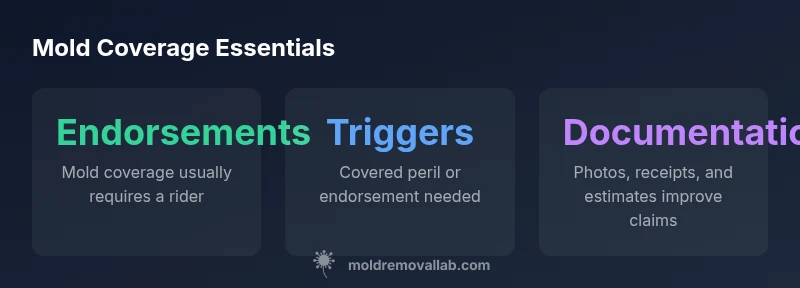
Mold coverage in State Farm policies is not a blanket guarantee. The base policy often relies on peril-based triggers and excludes routine mold growth. According to Mold Removal Lab, most homeowners will need a mold endorsement or an explicit rider to gain meaningful protection. The exact terms—such as what constitutes mold, the moisture source, and limits—vary by state and policy version. Homeowners should interpret these terms carefully, as a denial can occur if the incident is not framed as a covered peril or if the rider’s conditions are not met. Proactive policy review with an agent helps align expectations with what is actually covered in your plan.
Mold Removal Lab emphasizes that understanding definitions within the policy is essential. Look for language around “mold,” “moisture,” and “perils” to determine whether typical scenarios—like leaks, floods, or storms—qualify for coverage under a rider. This foundation reduces ambiguity during a claim and helps homeowners avoid surprises when a mold issue arises.
How Endorsements Change Your Mold Coverage
Endorsements and riders are the most reliable path to meaningful mold protection under State Farm. A dedicated mold endorsement can cover remediation costs, testing, and disposal, with specified limits and deductibles. Endorsements may also clarify which moisture sources are eligible and under which conditions mold cleanup is payable. When evaluating endorsements, compare the trigger language (peril versus broad mold coverage), the scope of remediation and testing coverage, annual or per-claim limits, and any maintenance prerequisites. The key takeaway is that endorsements are not universal—opt in, read the fine print, and confirm the premiums align with your risk profile.
Common Scenarios Where Mold Is Covered Under State Farm
There are limited situations where mold coverage may apply without a rider, typically tied to a covered peril. For example, mold resulting from a burst pipe, sewer backup, or certain weather events may be addressed up to policy limits when those events are defined as covered perils. In such cases, remediation costs can be paid subject to deductibles and exclusions. Prompt documentation—photos, repair receipts, and flood or water intrusion reports—supports the claim and speeds processing. However, routine maintenance failures or gradual moisture buildup generally do not qualify for coverage. This reinforces the importance of proactive moisture control and clear incident records.
Steps to Verify Your Policy Language and Right Coverage
Start by locating mold-related terms in your policy and endorsement documents. Identify definitions of mold, moisture, and the covered perils, along with any sublimits. Talk to your agent about adding or updating a mold endorsement and request a written description of coverage and exclusions. If possible, obtain a claim-flow diagram and concrete examples of approved and denied mold claims. Consider a side-by-side comparison with another insurer to gauge policy norms in your area. The objective is to enter with precise language and documented expectations, reducing friction during a mold event.
How to Choose a Mold Endorsement: What to Look For
Choose with clarity and protective limits in mind. Prioritize trigger language (peril-based vs broad mold coverage), the scope of remediation and testing costs, and the caps or deductibles. Also examine any moisture-control conditions or maintenance responsibilities and whether the endorsement offers expedited remediation or preferred vendor access. A strong endorsement maps directly to real risks in your home—kitchens, bathrooms, basements, and laundry rooms—where moisture issues are most likely to occur. Align the endorsement with your home’s vulnerability profile.
How to File a Mold Claim with State Farm: A Practical Guide
If you suspect mold and believe coverage applies, file promptly. Gather evidence: photos, remediation estimates, water-damage reports, and receipts. Notify your State Farm agent or claims line and provide a detailed incident description. Maintain a log of communications and response times. If you are unsure whether a given event is covered, request a formal determination in writing. Enlist licensed mold professionals to document the extent of growth and remediation needs, which can strengthen the claim if coverage applies.
Alternatives to Insurance Coverage: Prevention and Home Remedies
Prevention often beats remediation costs. Maintain humidity control, fix leaks promptly, and ensure good ventilation in damp areas. Use dehumidifiers in basements and garages, and perform regular inspections for hidden moisture sources. For small mold growth, follow safe, manufacturer-approved cleaning methods; for larger growth, consult licensed professionals. Mold Removal Lab stresses that prevention, early detection, and proper record-keeping are the most reliable strategies to minimize both health risks and financial exposure.
A Quick Checklist for Homeowners
- Inspect for hidden moisture sources in kitchens, bathrooms, basements, and laundry rooms.
- Fix leaks promptly and dry affected areas within 24-48 hours.
- Install humidity controls and air circulation to prevent condensation.
- Maintain documentation of water events and remediation steps.
- Talk with your insurer about endorsements that add mold protection and obtain written coverage details.
- Schedule periodic mold inspections if you live in damp climates or have experienced past mold issues.
- Build a simple emergency plan for quick response after a water incident.
2026 Update: What Has Changed in Mold Coverage
The 2026 landscape emphasizes clearer endorsement options and more explicit language across major carriers, including State Farm. Consumers are urged to ask precise questions about triggers, limits, and whether testing and remediation costs are included in endorsements. With climate-driven moisture events rising, riders are being offered with more detailed mold coverage, while prevention remains the most reliable defense. Mold Removal Lab will continue tracking policy language and claim outcomes to deliver updated guidance for homeowners and renters.
Mold coverage scenarios under State Farm policies
| Scenario | Coverage | Notes |
|---|---|---|
| Water damage from a covered peril | Possible coverage with endorsement | Remediation costs may be covered up to limits |
| Maintenance-related mold | Usually not covered | Requires prevention and mitigation strategy |
| Mold under endorsement | Covered per policy terms | Subject to limits and conditions |
FAQ
Does State Farm cover mold in all cases?
No. Mold coverage depends on peril-based triggers or endorsed riders. Routine mold growth is typically not covered without a specific endorsement.
Mold isn’t covered in every case; you usually need a rider or a defined peril.
What triggers mold coverage?
A covered peril or an endorsed rider that specifically mentions mold eligibility triggers coverage. Definitions of mold and moisture sources matter.
Coverage usually starts after a covered event or a mold endorsement kicks in.
How can I add mold coverage to a State Farm policy?
Talk to your State Farm agent about adding a mold endorsement and request written terms and costs. Compare terms with other options if needed.
Ask about a mold endorsement and review the written terms.
Does mold remediation cost count toward insurance?
Only if your endorsement or policy covers remediation; otherwise, you may pay out of pocket or with limited reimbursement.
Remediation costs are covered only if the plan includes them.
How should I document a mold incident for a claim?
Take clear photos, save receipts, and keep logs of dates and communications. Have moisture reports and remediation estimates ready.
Document everything with photos and timelines.
“Mold coverage is policy-specific and often depends on endorsements offered by the insurer. Don’t assume it’s included—read the terms and ask questions.”
The Essentials
- Review policy for mold endorsement specifics.
- Mold is often excluded without an endorsement.
- Ask about triggers and limits before a loss occurs.
- Document water events and remediation efforts promptly.
- Discuss endorsements with your agent to close coverage gaps.