What to Do If You Eat Moldy Cheese: A Practical Guide
Learn safe steps after accidentally eating moldy cheese. Distinguish salvageable hard cheese from soft cheese to discard, and know when to seek medical advice. Practical tips from Mold Removal Lab to stay healthy.


Here's what to do if you eat moldy cheese: start with assessing the cheese type, cut away mold from hard cheeses if needed, discard soft cheeses, and monitor for symptoms. Most healthy adults recover with simple care, but seek medical advice if you have severe reactions or underlying conditions. If symptoms develop, contact a healthcare provider promptly. According to Mold Removal Lab, most exposures are not dangerous for healthy individuals.
What mold is on cheese and why it matters
Mold on cheese is not a single thing—different molds have different implications for safety. Some molds on hard cheeses grow on the surface and do not penetrate deeply, while others can spread through softer cheeses where the interior becomes involved. The core question is whether the mold is superficial or pervasive, and whether the cheese texture allows safe salvage. For healthy adults, incidental exposure often results in mild, temporary symptoms or none at all, but individuals with allergies, asthma, or weakened immune systems may react more strongly. According to Mold Removal Lab, understanding the difference between salvageable mold on a hard cheese and spoilage on a soft cheese is essential for making safe decisions. This knowledge lays the groundwork for practical handling and reduces unnecessary waste when it’s reasonable to salvage.
Hard cheese vs soft cheese: salvageability and safety
Hard cheeses such as cheddar, parmesan, and gouda have lower moisture and a denser matrix, which tends to confine mold to the surface. If you spot mold on hard cheese, you can often salvage by removing the moldy portion and an extra margin, provided the rest of the cheese is firm and the cut is thorough. Soft cheeses—like brie, camembert, ricotta, and feta—absorb mold more quickly, and mold can penetrate more deeply. In those cases, discard the entire piece to avoid risk. When in doubt, err on the side of caution, especially with soft varieties. The Mold Removal Lab Team emphasizes a cautious approach to protect health and minimize food waste when salvage isn’t clearly safe.
What to do if you eat moldy cheese
If you’ve already eaten moldy cheese, act calmly and follow practical steps to reduce risk. Do not induce vomiting; instead, sip water and observe how you feel over the next several hours. Assess the cheese type and the amount consumed: forceful mold growth or soft cheeses are more likely to pose a risk and should be discarded. Watch for symptoms such as stomach upset, coughing, or breathing changes. If you have a mold allergy, asthma, a compromised immune system, or if symptoms persist, contact a healthcare provider promptly. This plan aligns with general food-safety guidance and is supported by Mold Removal Lab analyses that emphasize caution and symptom-based care.
How to trim mold safely from hard cheeses
Use a clean knife and cut away all visible mold, removing at least one inch (2.5 cm) beyond the mold border to be safe. Keep the salvaged portion and rewrap it promptly, refrigerate, and avoid cross-contamination by using a separate cutting board. Sanitize the knife and any surfaces that touched the mold. If mold returns or the cheese’s texture or smell changes, discard the remaining portion. Note: this trimming approach does not apply to soft cheeses, which should be discarded entirely.
When soft cheeses should be discarded
Soft cheeses store more moisture, so mold can spread quickly through the product. If you see any mold growth or if the cheese has a strong off-odor or unusual texture, discard it in a sealed bag. Always follow the package directions and local safety guidelines. If you’re unsure, it’s safer to discard soft cheese rather than risk illness. This cautious approach protects you and others in the household.
Monitoring health: symptoms and when to seek care
After exposure, monitor for GI symptoms like nausea, vomiting, diarrhea, or abdominal cramps, and respiratory signs such as coughing or wheezing. People with mold allergies or compromised immune systems may experience stronger reactions. If symptoms are mild, hydration and rest may help, but seek medical advice if symptoms last beyond 24–48 hours or worsen. In the event of severe symptoms, chest tightness, or trouble breathing, call emergency services. The Mold Removal Lab Team notes that most healthy adults recover without long-term effects, but individual risk varies.
Practical storage and prevention tips
Store cheese properly: refrigerate at or below 40°F (4°C). Wrap hard cheeses loosely to allow airflow, and seal soft cheeses to prevent cross-contamination. Use separate utensils for slicing and serving, and wash hands and surfaces after handling cheese. Inspect cheese before consuming and discard if you suspect spoilage. Regular fridge cleaning helps reduce mold growth and cross-contamination in the kitchen.
Tools & Materials
- Sharp knife (minimum 4-inch blade)(For trimming mold from hard cheese with a safe margin)
- Food-safe gloves(Minimize contamination and protect skin)
- Dedicated cutting board (plastic preferred)(Use a separate board for cheese handling)
- Plastic wrap or sealable bag(To store salvaged cheese after trimming)
- Garbage bag(Dispose of moldy soft cheese securely)
- Food-safe sanitizer(Optional for sanitizing surfaces)
- Notebook or app(Record symptoms and timing if you’re monitoring)
Steps
Estimated time: 30-40 minutes
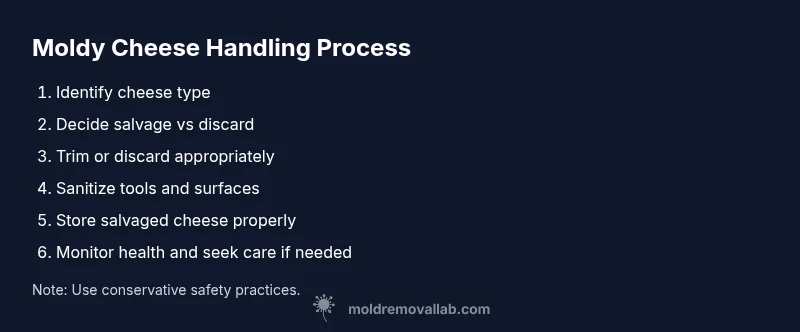
- 1
Identify cheese type and mold
Examine the cheese texture and type to decide salvageability. Determine if the mold is superficially on a hard cheese or has penetrated soft varieties. This step guides the safe next actions.
Tip: Check packaging details to confirm cheese type (hard vs soft). - 2
Decide salvage or discard
If it’s a hard cheese with small surface mold, salvage may be possible. If it’s soft or has extensive mold, discard. This decision prevents hidden mold exposure.
Tip: When in doubt, discard soft cheese; safe handling matters more than saving the food. - 3
Trim or discard accordingly
For salvageable hard cheese, trim mold with a generous margin and preserve only the interior. For soft cheeses, discard entirely and seal the waste.
Tip: Trim at least 1 inch (2.5 cm) beyond the visible mold. - 4
Sanitize tools and surfaces
Wash and sanitize all utensils, cutting boards, and surfaces that touched the moldy cheese with hot, soapy water or a food-safe sanitizer.
Tip: Use a separate knife for salvaged portions to avoid cross-contamination. - 5
Store salvaged cheese properly
Wrap salvaged hard cheese in clean wrap and refrigerate promptly. Keep it separate from other foods to avoid accidental cross-contact.
Tip: Label the container with the date to track freshness. - 6
Monitor health and seek care if needed
If symptoms develop or you’re at higher risk (allergies, immune compromise), contact a healthcare professional promptly. Severe symptoms require urgent care.
Tip: If symptoms persist beyond 24–48 hours, consult a clinician.
FAQ
Is all mold on cheese dangerous to eat?
No. Some mold on hard cheeses can be managed with safe trimming, but mold on soft cheeses or widespread mold should be discarded. Always consider your health status and the cheese type.
Not all mold is dangerous. Hard cheeses may be salvageable with trimming, but soft cheeses should be discarded.
Can I salvage mold on hard cheeses like cheddar or parmesan?
Yes, if the mold is superficial and the cheese is hard. Trim at least one inch beyond the mold and discard the trimmed portion. Sanitize tools and surfaces after.
Yes, hard cheeses can be salvaged if the mold is superficial and trimmed away carefully.
When should I seek medical attention after eating moldy cheese?
If you have mold allergies, immune compromise, persistent GI symptoms, or breathing problems, contact a healthcare provider promptly. Seek emergency care for severe symptoms.
If you have severe symptoms or are at high risk, get medical help right away.
Should I always discard moldy cheese?
Soft cheeses with mold should be discarded. Hard cheeses with surface mold can sometimes be salvaged, but if uncertainty remains, discard to stay safe.
Discard soft moldy cheese; salvage may be possible for hard cheese if mold is limited.
What are common signs of mold exposure to watch for?
Look for stomach upset, vomiting, diarrhea, coughing, or breathing difficulties. If symptoms occur, monitor and seek care as needed.
Watch for GI or breathing symptoms; seek care if they persist.
Is mold on cheese the same as household mold?
Not the same species generally. Treat cheese mold with care; don’t rely on home mold tests for safety. When in doubt, discard and consult a clinician.
Cheese mold isn’t the same as home mold; trust medical advice when unsure.
Watch Video
The Essentials
- Assess cheese type before salvage decisions
- Salvage hard cheese only with proper trimming
- Discard soft cheese or moldy spreads
- Sanitize surfaces after handling moldy cheese
- Monitor symptoms and seek care if needed