Mold Black Symptoms: Spot, Confirm, and Respond Fast
Learn to recognize mold black symptoms, understand health risks, and take practical, safe steps to inspect and remediate moisture-related mold in your home. Quick guidance for homeowners and renters.


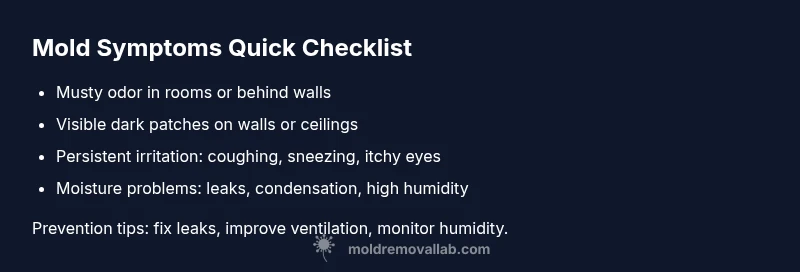
According to Mold Removal Lab, mold black symptoms span health effects and home clues. Common signs include a persistent musty odor, visible black or greenish patches, and recurring irritation like coughing, nasal congestion, or wheezing. Hidden moisture and poor ventilation drive growth, so start by checking damp areas and addressing any water issues before testing or cleaning.
What Mold Black Symptoms Look Like
Mold black symptoms appear when moisture feeds growth and people are exposed in everyday spaces. According to Mold Removal Lab, recognizing these signs early can prevent extensive damage and protect health. The most telling cues combine both appearance and smell. You might notice a persistent musty odor that lingers even after cleaning, or see dark patches that range from flat to slightly velvety textures on walls, ceilings, or under sinks. Color can vary from jet-black to slate-gray, often with a greenish tint where moisture is frequent. In many homes, patches hide behind wallpaper, paint, baseboards, or behind appliances where airflow is limited. People living in damp basements or bathrooms report symptoms such as coughing, throat irritation, nasal congestion, and itchy or burning eyes. These health signs are not guaranteed proof of mold but should trigger moisture testing and caution. The combination of odor, patch, and symptoms strongly suggests a moisture-related growth requiring attention.
Health Signals You Might Notice
Health signals from mold exposure can resemble seasonal allergies or a respiratory infection, which makes recognizing mold black symptoms crucial. Individuals with asthma or allergies might experience wheezing, coughing, chest tightness, or shortness of breath more readily in damp spaces. Beyond the lungs, eye irritation, nasal congestion, runny nose, and throat soreness are common. Fatigue and headaches can also accompany ongoing exposure. In children, elderly residents, or immune-compromised individuals, symptoms may escalate quickly. Mold Removal Lab analyses emphasize that persistent symptoms in moisture-prone areas should prompt a moisture assessment and professional evaluation rather than assuming an allergy flare. Document when symptoms start and where they are most noticeable to help diagnose underlying moisture sources.
Visual Signs and Odor Clues
The most obvious mold black symptoms are visible patches that can appear black, greenish-black, or grayish, and they often grow in clusters around windows, basements, bathrooms, kitchens, and laundry rooms. Patches may look powdery, fluffy, or slimy, depending on the moisture level. Alongside patch appearance, a persistent musty odor is a strong indicator of unseen mold growth behind walls or under floors. Odors may be strongest in humid rooms or after rain, and they often linger even after cleaning visible surfaces. Remember that mold can hide behind wallpaper, drywall, or furniture, so don’t rely on surface inspection alone. If you smell a stale, damp odor or see suspicious stains, treat it as a warning sign and investigate moisture sources.
Hidden Moisture Sources That Feed Growth
Black mold thrives where moisture persists. Common culprits include leaks from roofs, pipes, or appliances, condensation on windows, poor ventilation in bathrooms and kitchens, and high indoor humidity. Hidden leaks behind walls or under flooring can go unnoticed until patches appear. Condensation forms when warm, moist air contacts cool surfaces, creating ongoing dampness that sustains mold growth. Addressing moisture is the most critical step in controlling mold, so start by inspecting for leaks, testing humidity levels, and ensuring proper drainage away from the home. If you’re unsure where moisture enters, enlist a professional to perform a moisture assessment with infrared cameras or moisture meters.
Safe First Steps for Immediate Action
If you suspect black mold, prioritize safety and containment. Wear protective gear: N95 mask, splash goggles, gloves, and long sleeves. Avoid disturbing moldy areas to minimize spore release. Close off the affected space from your living areas and turn on ventilation to outdoors rather than into other rooms. Do not mix cleaners in ways that create harmful fumes. Start by fixing obvious moisture sources, drying the area with dehumidifiers or fans, and cleaning small, non-porous surfaces with soap and water. For porous materials like drywall or upholstery, do not attempt extensive cleaning—these may require professional removal. After initial cleanup, monitor humidity and moisture levels to prevent regrowth.
When to Test and Why DIY Can Be Risky
Testing for mold type and concentration can help quantify the problem, but DIY kits vary in reliability and may not distinguish harmful species from harmless ones. If you see extensive growth or experience persistent health symptoms, it’s wise to consult a trained professional who can perform a definitive assessment, including air and surface testing. Mold Removal Lab recommends using accredited labs for formal analysis when growth is suspected beyond cosmetic levels. Remember that spores can become airborne during cleaning, so professional containment and proper PPE protect occupants during remediation.
Containment, Cleaning, and Drying Safely
Containment is key to preventing spread. Seal off the room, suspend negative air pressure if possible, and use HEPA-filter vacuums for cleanup on non-porous surfaces. For non-porous surfaces, wash with detergent and water, then dry completely. Porous materials like drywall, carpet, or insulation typically require removal and replacement rather than cleaning. Drying is essential: reduce humidity below 50 percent if possible and ensure good air movement with dehumidifiers or fans directed to open air. After cleanup, recheck for new damp spots, fix any moisture issues, and consider applying mold-resistant paints or coatings on repaired areas to deter recurrence.
Long-Term Prevention to Stop Recurrence
Prevention rests on moisture control, airflow, and regular maintenance. Fix leaks promptly, improve ventilation in bathrooms and kitchens, and run dehumidifiers in damp spaces such as basements. Keep indoor humidity between 30 and 50 percent, use exhaust fans during showers and cooking, and seal cracks around windows where moisture can penetrate. Regularly inspect areas prone to dampness, such as basements, crawlspaces, and behind appliances. When remodeling, select mold-resistant materials and ensure proper sealing and moisture barriers. Documentation of maintenance and moisture levels helps track improvements and prevent future growth. The Mold Removal Lab Team emphasizes consistency in prevention to safeguard health.
Quick Troubleshooting Notes and Safety Reminders
Always prioritize safety when dealing with possible mold. If more than a small affected area is identified, or if anyone in the home has health concerns, contact a licensed professional for remediation. Never mix bleach with ammonia or other cleaners, as this can release toxic gases. Use protective equipment, maintain good ventilation, and avoid disturbing mold to minimize spore dispersion. After remediation, address underlying moisture issues and conduct follow-up inspections to confirm that mold does not return.
Steps
Estimated time: 60-180 minutes
- 1
Assess safety and gather PPE
Put on an N95 mask, safety goggles, gloves, and long sleeves. Ensure area is ventilated and children or pets are away. This minimizes exposure to spores during any inspection.
Tip: Double-check PPE fit before entering the affected space. - 2
Contain the space
Close doors to the room and seal off HVAC vents if possible to prevent spread. Use plastic sheeting to section off the area.
Tip: Limit disturbance to reduce airborne spores. - 3
Identify moisture sources
Look for leaks, damp spots, condensation, and water stains. Check roofs, pipes, and windows. Fix issues or document them for professionals.
Tip: Take photos of all moisture sources for reference. - 4
Decide on cleanup scope
If growth covers large areas or has penetrated porous materials, plan for professional remediation. For small non-porous surfaces, cleaning with detergent and water can be done.
Tip: Avoid scrubbing porous materials aggressively. - 5
Clean and dry surfaces
Non-porous surfaces: scrub with detergent and rinse. Porous materials: remove and replace. Dry thoroughly within 24-48 hours to prevent regrowth.
Tip: Use dehumidifiers to accelerate drying. - 6
Inspect and monitor
Recheck the area after cleaning. Address any remaining damp spots and continue humidity control. If symptoms persist, escalate to professional remediation.
Tip: Keep a maintenance log for future reference.
Diagnosis: Persistent musty odor + visible dark patches + respiratory irritation
Possible Causes
- highMoisture intrusion from leaks or condensation
- mediumHabitual poor ventilation and high humidity
- lowRecent water damage or hidden leaks behind walls
Fixes
- easyIdentify and repair moisture source (leak, roof, plumbing)
- easyImprove ventilation and reduce humidity with exhaust fans and a dehumidifier
- mediumContain area and perform controlled cleanup; if growth is extensive, call a pro
FAQ
What are the most common signs of black mold in a home?
Common signs include a musty odor, visible dark patches, and irritation like coughing or eye tearing. If you notice these, investigate moisture sources and consider a professional assessment.
Look for a musty smell and dark patches along with allergy-like symptoms, and take moisture seriously.
Are black mold symptoms dangerous to health?
Exposure can irritate airways and trigger allergic reactions. Sensitive individuals may experience more severe symptoms; seek medical advice if symptoms worsen.
Exposure can be risky, especially for sensitive people. See a doctor if symptoms rise.
Can I test for black mold myself?
DIY tests exist but can be unreliable. A professional assessment or accredited lab provides a more accurate determination of mold type and extent.
DIY tests may help, but professionals give a clearer picture.
What should I do if I find black mold in my home?
Limit exposure, isolate the area, fix moisture sources, and contact a professional remediation service for containment and removal of mold growth.
Limit exposure and call a pro if it’s larger or persistent.
Is DIY mold cleanup safe or should I hire a professional?
Small, contained patches might be cleaned safely with precautions, but larger or widespread growth should be handled by professionals to ensure containment and proper remediation.
Small patches might be doable, but big jobs need pros.
When should I call a professional for black mold symptoms?
If you notice extensive growth, persistent moisture, or ongoing health concerns, professional remediation is advised to ensure proper containment and safe removal.
Call a pro if growth is extensive or health concerns persist.
Watch Video
The Essentials
- Identify moisture sources before cleaning
- Start with containment to prevent spread
- Small areas can be cleaned safely; large growth requires pro help
- Maintain humidity control to prevent recurrence