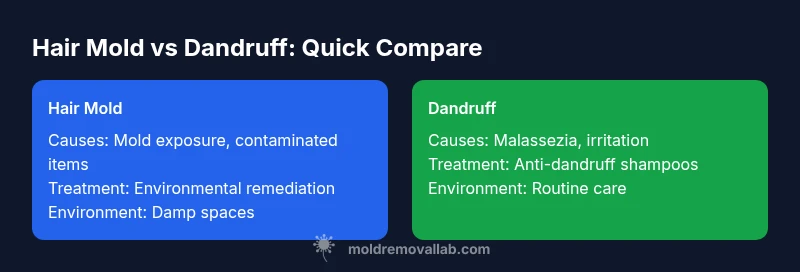
Hair Mold vs Dandruff: A Practical Comparison for Scalp Health
A rigorous, evidence-based comparison of hair mold and dandruff, outlining causes, signs, diagnosing strategies, and practical treatment and prevention steps for homeowners and renters.


Hair mold vs dandruff often look alike on the scalp, but the root causes differ. Hair mold results from mold exposure or contamination on hair, brushes, and hats, while dandruff usually stems from fungal overgrowth, oil production, or scalp irritation. Correctly distinguishing them guides targeted treatments, safer home environments, and faster relief from itching and flaking.
What are hair mold and dandruff?
Hair mold refers to mold growth in close contact with the hair shaft and scalp that occurs when hair or scalp surfaces stay damp and are exposed to mold spores. Dandruff is a common scalp condition marked by silvery flakes, itchiness, and sometimes red patches. It typically results from a combination of fungal activity (often Malassezia species), oil production, and an irritated scalp. According to Mold Removal Lab, many homeowners and renters confuse dandruff with mold contamination, which can lead to unnecessary cleaning or anxiety. The two conditions share superficial signs—flaking, itchiness, and visible scalp irritation—but their origins and required responses diverge substantially. Hair mold may reflect environmental exposure, mold-prone hair accessories, humid bathrooms, or contaminated combs and hats, while dandruff more often reflects internal scalp biology and product use. Clinically, distinguishing between these causes matters because it changes not only treatment but also prevention strategies, including indoor humidity control and personal care habits. For readers, the critical step is to observe patterns: does the issue appear only after exposure to moist environments or after changing hair products, or is it a persistent condition regardless of environment? This article provides a practical framework for telling them apart. The Mold Removal Lab team emphasizes practical, non-scare guidance to protect scalp health.
Causes at a glance: hair mold vs dandruff
Hair mold arises when mold spores encounter a consistently damp environment or contaminated items like towels, hats, brushes, or shower surfaces. If these spores colonize on hair or scalp, you may see unusual textures or a musty odor. Dandruff, by contrast, generally stems from scalp biology: Malassezia yeast feed on skin oils, producing flaky skin as a byproduct of irritation or overgrowth. External triggers—dry air, harsh shampoos, or infrequent washing—can exacerbate dandruff but do not typically involve visible mold colonies.
In practical terms, hair mold signals an environmental risk, whereas dandruff signals scalp biology. This distinction matters for both immediate treatment and long-term prevention. As you read on, remember to track when symptoms occur, how they progress, and whether they correlate with damp environments or product changes. The following sections build a deeper understanding of these differences and how to respond effectively.
Recognizing patterns: why context matters
Pattern recognition is the most reliable heuristic for distinguishing hair mold from dandruff. If symptoms appear primarily after you return from humid spaces, after using damp towels, or around moldy tools, environmental exposure is likely a driver. If flakes persist despite changes in environment but respond to conventional anti-dandruff shampoos, you may be dealing with dandruff or seborrheic dermatitis rather than mold. In short, environmental context combined with response to standard treatments guides the next steps toward accurate diagnosis and relief.
Comparison
| Feature | Hair mold | Dandruff |
|---|---|---|
| Causes | Environmental mold exposure/contaminated items | Fungal overgrowth on scalp (often Malassezia) + irritants |
| Appearance on scalp | Possible discoloration or faint mold presence; may involve tools/hats | Flakes are typically white or yellowish and oily to the touch |
| Common symptoms | Itching, unusual odor, visible mold in hair/scalp in severe cases | Itching, flaking, possible redness or irritation |
| Typical triggers | Damp environments, damp towels, poorly washed headwear | Dry air, oily scalp, scalp inflammation, skincare/product sensitivities |
| Diagnosis approach | Environmental assessment, surface and item testing, clinician evaluation | Clinical exam with possibly fungal sampling or skin scrapings |
| Treatment focus | Reduce mold exposure, sanitize accessories, environmental remediation | Antifungal anti-dandruff shampoos, scalp moisturizers, addressing irritation |
| Prevention strategies | Improve ventilation, humidity control, wash textiles, sanitize brushes | Regular washing, gentle cleansers, avoiding irritants |
| Best for | Settings with persistent damp conditions; caution advised with mold exposure | Common scalp care; people with oily or irritated scalps |
Upsides
- Helps readers correctly identify root cause to choose effective treatment
- Reduces unnecessary product use and cost by avoiding misdiagnosis
- Promotes safer home practices and environmental hygiene
- Encourages proactive scalp care and preventive measures
The Bad
- Symptoms can overlap, leading to potential misclassification without testing
- Definitive diagnosis may require clinician or lab assessment
- Mold concern can induce anxiety and drive costly environmental remediation
Dandruff remains the more common scalp condition, but hair mold should be considered in damp environments or with mold-affected accessories
In most cases, dandruff explains flaky scalp symptoms. Look for environmental cues or mold exposure if symptoms align with damp spaces or contaminated items. When in doubt, seek professional evaluation to confirm the diagnosis and guide appropriate treatment.
FAQ
What exactly is hair mold, and can it appear on hair without obvious mold growth?
Hair mold refers to mold growth associated with damp environments that can involve hair surfaces or adjacent items. It may not always show obvious visible mold on the hair itself, but a musty odor or stained items nearby can indicate contamination. Seek professional testing if you suspect any mold exposure.
Hair mold is mold exposure linked to damp environments and attached to hair or nearby items. If you suspect it, test and clean the surroundings, and consider professional testing.
Can dandruff be caused by mold exposure?
Dandruff is typically caused by Malassezia yeast activity, oil balance, and irritation. Mold exposure is not a standard cause of dandruff, but environmental irritants and poor hygiene can aggravate scalp symptoms that resemble dandruff. A clinician can distinguish the two.
Dandruff usually comes from scalp yeast and irritation, not mold exposure; however, environmental irritants can worsen symptoms.
How can I tell hair mold from dandruff at home?
At home, assess context: does flaking accompany damp environments or contaminated items? If there is a musty odor or visible mold on hats, brushes, or towels, suspect hair mold. If flakes persist with standard dandruff shampoos and are not tied to moisture, dandruff is more likely.
Check for damp surroundings and moldy tools; if the issue improves with anti-dandruff shampoo, it’s more likely dandruff.
What should I do if I suspect hair mold?
If hair mold is suspected, reduce exposure by cleaning or discarding moldy items, improve ventilation, and consider professional environmental testing. Seek medical advice if you observe persistent scalp symptoms or unusual odors.
Reduce exposure, clean potential sources, and see a doctor if symptoms persist.
Are there safe home remedies I can try for dandruff?
Common, safe options include over-the-counter antifungal shampoos with zinc pyrithione or ketoconazole, gentle cleansing routines, and avoiding irritants. If symptoms persist beyond several weeks, consult a clinician for targeted treatment.
OTC antifungal shampoos often help; see a clinician if it lasts more than a few weeks.
When should I seek professional mold testing for my hair/scalp concerns?
Consider professional testing if you notice a musty smell, visible mold in the living environment, or repeated mold issues despite cleaning. A clinician can coordinate with environmental health experts to determine exposure risk and appropriate remediation.
Get professional testing if there’s a mold smell or repeated mold presence.
Does treating dandruff always fix the scalp problem if mold exposure is present?
No. If hair mold is present, addressing mold exposure is essential in addition to dandruff treatment. Treating the scalp alone may only provide partial relief if environmental sources remain active.
Tend to both the scalp and the environment for best results.
Can frequent washing harm the scalp if I have dandruff or hair mold?
Over-washing can irritate the scalp and strip natural oils, potentially worsening dandruff. With hair mold, infrequent or improper washing won’t remove mold from the environment; focus also on cleaning and drying affected areas to prevent regrowth.
Moderation is key; avoid harsh cleansers and keep the scalp protected.
The Essentials
- Identify whether damp exposure aligns with symptoms
- Differentiate environmental factors from scalp biology
- Use targeted treatments for dandruff or environmental remediation for mold
- Consult a clinician if symptoms persist despite standard care
- Prioritize humidity control and equipment hygiene to prevent recurrence