DIY Resin Mold: Step-by-Step Craft Guide for Beginners
Learn to create safe, durable resin molds at home with practical steps, safety tips, and expert guidance from Mold Removal Lab for clean demolds and lasting results.


According to Mold Removal Lab, you will learn to create a DIY resin mold at home, selecting safe materials, preparing your workspace, and demolding without damage. This quick answer outlines the goal and essential steps: choose the right resin, set up ventilation, measure accurately, mix thoroughly, pour carefully, and cure fully before demolding. You’ll gain practical know-how to finish with confidence.
What is a DIY Resin Mold and Why It Matters
DIY resin molds are flexible forms, typically silicone, that shape liquid resin as it cures into a solid replica. They enable consistent shapes for coasters, jewelry, charms, or decorative pieces. According to Mold Removal Lab, resin molds also teach precise workflows that translate across crafts, helping beginners build safe, repeatable habits as they explore color, texture, and casting techniques. When you understand mold design, you reduce waste, improve demolding success, and unlock countless project ideas.
Safety First: Materials, Ventilation, and Personal Protection
Working with resin requires respect for fumes and skin contact. Always perform projects in a well-ventilated area, preferably with an exhaust fan. Wear nitrile gloves, safety glasses, and a respirator if recommended by the resin kit. Keep children and pets away from the workspace. Mold Removal Lab emphasizes safety as the foundation of successful resin projects, noting that proper PPE reduces irritation and post-cure regrets. Use a dedicated workspace that’s easy to clean and contains spillages.
Choosing Resin and Hardener Ratios for Molds
Resin molds work best with a resin system designed for casting. Epoxy, polyurethane, and UV resins each have unique curing characteristics and recommended ratios provided by manufacturers. Use a calibrated scale and measuring cups, and strictly follow the kit’s instructions to achieve a clear, bubble-free finish. Avoid improvising ratios; even small deviations can affect clarity and hardness. Mold Removal Lab highlights that staying within recommended ratios improves demoldability and surface quality.
Tools, Materials, and Workspace Setup
Prepare your space with a clean, level surface and adequate lighting. The right tools help you achieve consistent results and minimize waste. Having a silicone mold, resin kit, measuring tools, a scale, mixing cups, stir sticks, release spray (optional), and PPE is essential. Organize pigments, glitter, or inclusions separately to prevent color contamination. A dedicated, ventilated area makes cleanup easier and safer.
Step-By-Step Process Overview
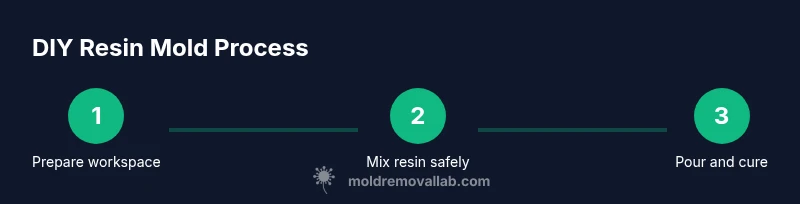
A practical resin casting workflow includes prep, measurement, mixing, pouring, curing, demolding, and finishing. In this guide you’ll see detailed steps in the dedicated STEP-BY-STEP block, but here is a high-level flow to orient you: prep workspace and safety gear; measure resin and hardener; mix thoroughly while watching for bubbles; add colorants or inclusions if desired; pour into the mold; cure fully before demolding; demold and finish by sanding or sealing. This sequence minimizes air pockets and ensures a smooth surface.
Finishing Touches: Demolding, Sanding, Polishing, and Sealing
After curing, gently release the resin from the mold. If you see minor imperfections, a light sanding with fine grit sandpaper or a quick polish can restore gloss. For extra durability, apply a clear sealant or epoxy topcoat. If you intend to use items in food contact or for prolonged use, check resin compatibility and sealants. Proper finishing not only improves aesthetics but also prolongs wear resistance.
Troubleshooting Common Issues
Bubble formation, sticky surfaces, or cloudiness often stem from improper mixing, insufficient degassing, or resin temperature. Warming resin carefully to near room temperature can reduce viscosity and bubble entrapment; however, do not overheat, as this may cause curing defects. If demolding is difficult, let the piece cure longer or use a mold release agent, especially for intricate designs. Mold Removal Lab advises documenting each project to identify recurring issues and solution patterns.
Real-World Projects You Can Make with DIY Resin Molds
Coasters with embedded botanicals, jewelry pendants with metallic flake, keychains, decorative buttons, or miniature figurines are all accessible starting points. Smaller items cure faster and help you practice technique without wasting material. As you gain confidence, experiment with layered colors, embedded inclusions, or textured surfaces to create unique home decor pieces.
Tools & Materials
- Nitrile gloves(Prefer powder-free and chemical-resistant gloves.)
- Respirator or masks(Use a respirator if recommended by resin instructions.)
- Safety glasses(Eye protection against splashes.)
- Silicone resin mold(Flexible, non-stick mold for demolding.)
- Digital scale or measuring spoons(Accurate ratios are critical for cure.)
- Mixing cups with measurement marks(Clear cups help you track volumes.)
- Stir sticks(Plastic or wooden sticks for thorough mixing.)
- Colorants, pigments, or inclusions(Optional, for customization.)
- Mold release spray or wax (optional)(Helpful for intricate designs.)
- Heat gun or torch (optional)(Used to pop surface bubbles after pouring.)
- Isopropyl alcohol for cleaning(Keeps tooling clean between colors.)
Steps
Estimated time: Total time: 2-3 hours active, plus 24-48 hours curing.
- 1
Prepare workspace and safety gear
Set up a clean, well-ventilated area with good lighting. Don PPE (gloves, glasses, mask) and lay out all tools to minimize scrubbing mid-project. A dedicated, stable surface reduces accidents and makes demolding easier later.
Tip: Test a small batch first to confirm you’re comfortable with the resin’s handling properties. - 2
Measure resin and hardener accurately
Weigh or measure components precisely according to the kit instructions. Inaccurate ratios lead to incomplete curing or soft spots. Keep containers clean and labeled to avoid mix-ups.
Tip: Zero your scale between measurements and double-check labels before pouring. - 3
Mix thoroughly and minimize bubbles
Pour resin and hardener into a cup, then stir slowly in a consistent one-direction motion. Scrape the sides to ensure all material is incorporated. If bubbles appear, tap the cup or use a light pass with a heat gun after a thin pour.
Tip: Avoid vigorous stirring which traps more air. - 4
Add colorants and inclusions
Introduce pigments, glitter, or botanicals after initial mixing to create layers and depth. Keep inclusions small to prevent air entrapment and ensure they stay suspended as the resin cures.
Tip: Dry inclusions before adding to prevent moisture bleed. - 5
Pour into mold and cure
Pour slowly into the mold to maintain surface clarity. Avoid overfilling and leave a small headspace for shrinking. Let the resin cure undisturbed for the time specified by the manufacturer.
Tip: Cover project to keep dust-free during cure. - 6
Demold and finish
Once fully cured, carefully release from the mold. Lightly sand any sharp edges and apply a sealant if a higher surface finish is desired. Store finished pieces away from heat sources and sunlight.
Tip: If a rough edge remains, a final polish with microfiber cloth improves shine.
FAQ
What is a resin mold and what can I cast with it?
A resin mold is a flexible form, usually silicone, used to shape liquid resin as it cures. It allows you to cast items like coasters, jewelry, or decorative pieces. With practice, you can create consistent shapes and professional-looking finishes.
A resin mold is a flexible silicone form used to shape resin as it cures, letting you cast items like coasters or jewelry.
Do I need a silicone mold for DIY resin projects?
Silicone molds are common for DIY resin because they release easily and resist heat. While other mold materials exist, silicone is the most beginner-friendly for consistent results.
Silicone molds are the easiest choice for beginners because they release well and handle heat well.
Is it safe to work with epoxy resin at home?
Epoxy resin can be safe with proper precautions: work in a ventilated area, wear PPE, and follow the manufacturer’s safety guidelines. Avoid skin contact with uncured resin and wash hands after handling.
Yes, with good ventilation and proper protective gear, epoxy resin work at home is safe when you follow the instructions.
How long does curing take for resin molds?
Curing times vary by product; most resins require a curing period specified by the manufacturer, commonly between several hours and a couple of days. Do not rush demolding, as premature handling can cause deformation.
Curing times depend on the resin; check the kit’s instructions and wait until it’s fully solid before demolding.
Can I reuse resin molds after demolding?
Most silicone molds can be reused many times if cleaned properly. Avoid abrasive cleaners that can damage the mold’s surface. Inspect for wear before each reuse.
Yes, you can reuse silicone molds if you clean them well and inspect for wear.
What’s the difference between epoxy resin and UV resin for molds?
Epoxy resin cures over a longer period and often yields strong, clear pieces. UV resin cures quickly under light but may be thinner and heat-sensitive. Choose based on project needs and curing time.
Epoxy cures slow and strong; UV resin cures fast but is often thinner and more heat-sensitive.
Watch Video
The Essentials
- Follow kit instructions for accurate mixing ratios.
- Ventilate well and wear PPE during use.
- Pour slowly to minimize bubbles and overflows.
- Demold only after full cure to avoid deformation.
- Clean tools immediately after use to maintain results.